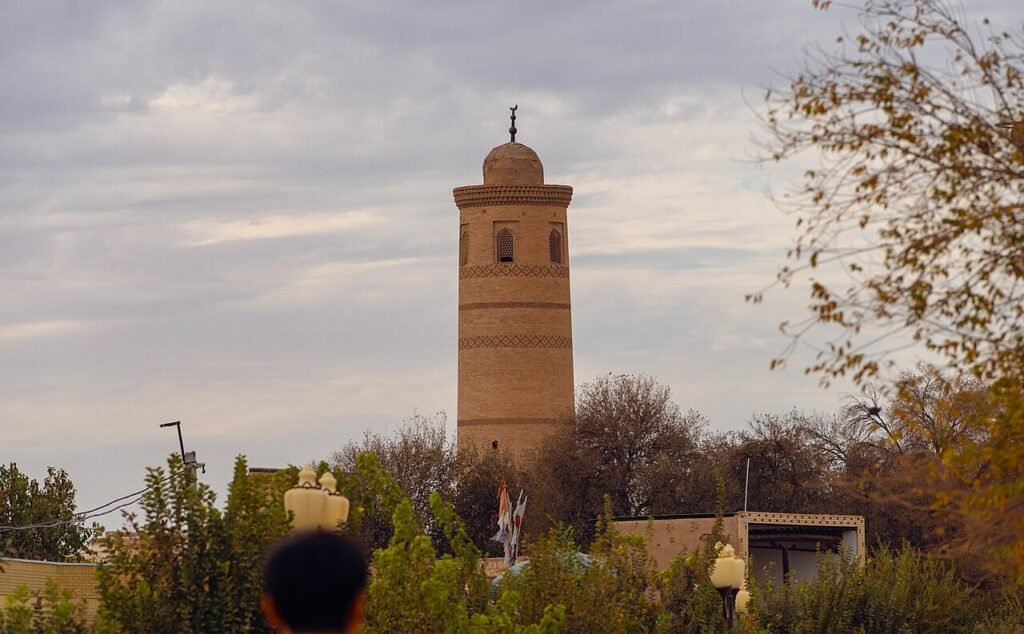

Uch Avliyo Mausoleum in Khiva: Visitor Guide
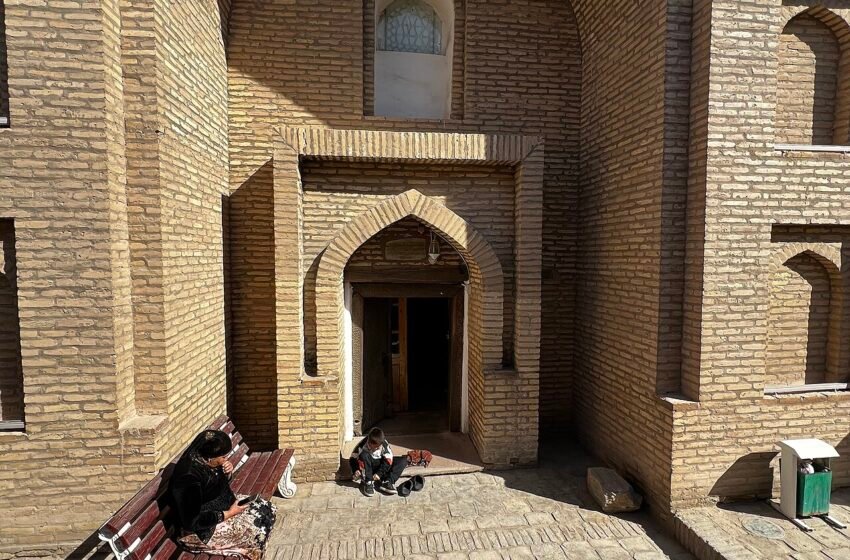
Photo: Uch avliyo (1).jpg by Bakhtiyarovna, Wikimedia Commons, CC BY-SA 4.0.
The Uch Avliyo Mausoleum is a small but historically important shrine in Khiva’s Itchan Kala, standing beside the western walls of Tash Khauli Palace. Built in the second half of the sixteenth century in honour of three holy men, it offers a quieter counterpoint to Khiva’s grander palaces, minarets and madrasas. Its domed interior, carved wooden door and layered history reward visitors who pause rather than simply pass through.
Why visit Uch Avliyo Mausoleum?
Uch Avliyo is not one of Khiva’s largest monuments, and it does not dominate the skyline like Islam Khoja Minaret or Kalta Minor. Its importance lies in its setting and atmosphere. The shrine forms part of the dense sacred and civic landscape of Itchan Kala, where mausoleums, mosques, palaces, trading spaces and family houses developed close together inside the fortified city.
The name is commonly translated as “Three Saints” or “Three Holy Men.” The mausoleum is associated with pilgrimage and remembrance, so it should be approached as a living religious site as well as a historic monument. Visitors interested in Khiva’s spiritual history may also wish to compare it with the better-known Pahlavan Mahmud Mausoleum and the Sayid Alauddin Mausoleum.
History and religious context
Official Uzbek tourism information places the mausoleum in the second half of the sixteenth century, near the western wall of Tash Khauli. Another regional heritage listing gives an earlier construction date of 1549, while the oldest burial identified at the site is dated to 1561. These references are not entirely consistent, so the safest description is that the shrine developed during the sixteenth century and was expanded or altered over time.
The complex contains several burials. The date 1561 is recorded on the carved entrance door, which also names the master craftsman as Abdullah ibn Said. This inscription makes the doorway more than a functional entrance: it is a valuable historical record connecting the building with a particular phase of Khorezmian craftsmanship.
Uch Avliyo was reconstructed in 1821–1822. Later, heavy rain and wind damaged the entrance, the mosque’s veranda and its columns. Restoration work was carried out again around 1980. Conservation records for Itchan Kala also refer to work on the southern entrance portal, ayvan elements, carved doors and columns, and surviving carved ganch decoration. These interventions are part of the monument’s modern history and explain why some areas may appear repaired or carefully preserved rather than untouched.
Architecture and details to notice
The principal interior is a large hall covered by a substantial dome with a cell-like vaulted treatment. In a city famous for blue tilework, Uch Avliyo is a useful reminder that Khiva’s architectural character also depends on proportion, brick construction, carved wood, plaster ornament and shaded transitional spaces.
- The carved entrance door: Look for the inscription recording the old burial date and the name of Abdullah ibn Said. Read the surface as an architectural document, not simply as decoration.
- The domed hall: Notice how the dome gives the relatively compact shrine a sense of vertical space and solemnity.
- The ayvan and columns: The veranda provides shade and creates a gradual transition between the street and the sacred interior. Its columns and roof structure have required repair over time.
- Burial layers: The presence of multiple graves reflects the mausoleum’s continuing importance as a place of remembrance rather than a single isolated tomb.
- The urban setting: Compare the shrine’s intimate scale with the monumental walls and ceremonial architecture of Tash Khauli nearby.
Itchan Kala as a whole is recognised by UNESCO as a historic walled city containing major examples of Central Asian Islamic architecture. Uch Avliyo is one element in that larger ensemble, and its value is best understood in relationship to the surrounding monuments rather than as a standalone building.
Planning your visit
A practical sequence
- Begin at Tash Khauli Palace and examine its courtyards and richly decorated interiors.
- Walk towards the palace’s western side and look for the Uch Avliyo complex in the surrounding historic streets.
- Allow around 15–30 minutes for the mausoleum itself, depending on whether the interior is open and whether worshippers are present.
- Continue towards nearby monuments such as the Allakuli Khan trading quarter, Juma Mosque or the city walls.
Uch Avliyo is located within the Itchan Kala State Museum-Reserve, near Tash Khauli. Exact opening arrangements, ticketing, access to the interior and any temporary conservation restrictions can change. Check locally shortly before visiting, especially if the mausoleum is a specific priority on your itinerary.
Early morning and late afternoon are generally the most comfortable times to explore Khiva’s exposed streets, particularly in warmer months. The shrine itself may be more atmospheric when the surrounding lanes are quieter, but always give priority to worshippers and local activity.
Etiquette, access and photography
Uch Avliyo is a mausoleum and pilgrimage site, not only a photo stop. Dress modestly, keep voices low and avoid blocking the entrance or veranda. If people are praying, wait quietly and follow the behaviour of local visitors. Ask before photographing individuals, religious activities or close-up details of worshippers.
Photography rules may vary by room, by caretaker or during restoration work. Do not use flash unless permission is clearly given, and avoid touching carved doors, columns, plasterwork or graves. Shoes may need to be removed before entering a prayer area; follow posted instructions or ask the caretaker.
The historic lanes and thresholds of Itchan Kala can be uneven, and access may be difficult for visitors using wheelchairs or with limited mobility. The site’s compact scale may make a short visit possible, but the route, surfaces and interior access should be assessed locally. Travellers with mobility needs should consider visiting with assistance and confirming conditions before arrival.
What to see nearby
Uch Avliyo fits naturally into a walking route through central Itchan Kala. Tash Khauli Palace is the immediate architectural landmark and provides a strong contrast between royal ceremonial space and devotional architecture. From there, you can continue to the complete Itchan Kala visitor route, including the Juma Mosque, madrasas and defensive walls.
For a longer circuit, combine the mausoleum with the Tash Khauli Palace guide, then walk towards the trading quarter and Allakuli Khan Madrasa. If you want to compare different forms of Khiva’s sacred architecture, Pahlavan Mahmud and Sayid Alauddin provide useful contrasts in scale, decoration and historical association.
Frequently Asked Questions
Where is Uch Avliyo Mausoleum in Khiva?
It stands inside Itchan Kala near the western walls of Tash Khauli Palace in the historic centre of Khiva.
What does Uch Avliyo mean?
Uch Avliyo is generally understood as “Three Saints” or “Three Holy Men,” referring to the shrine’s religious dedication.
How old is the mausoleum?
The building developed during the sixteenth century. The oldest burial identified at the site is dated to 1561, although some official listings give 1549 as a construction date.
Can visitors enter and take photographs?
Access and photography arrangements can change. Ask locally, dress respectfully, avoid flash and do not photograph people or religious activity without permission.
Sources and further reading
- Uzbekistan Travel: Uch-Avliyo Mausoleum
- Uzbekistan Travel: Khorezm pilgrimage sites listing
- UNESCO World Heritage Centre: Itchan Kala
- UNESCO: Itchan Kala monument list and conservation information
- UNESCO Periodic Report: Conservation of Itchan Kala
- app.uzbekistan.travel
Photo: Uch avliyo (1).jpg by Bakhtiyarovna, Wikimedia Commons, CC BY-SA 4.0.