

Khoja Zaynuddin Mosque-Khanaka in Bukhara: Visitor Guide
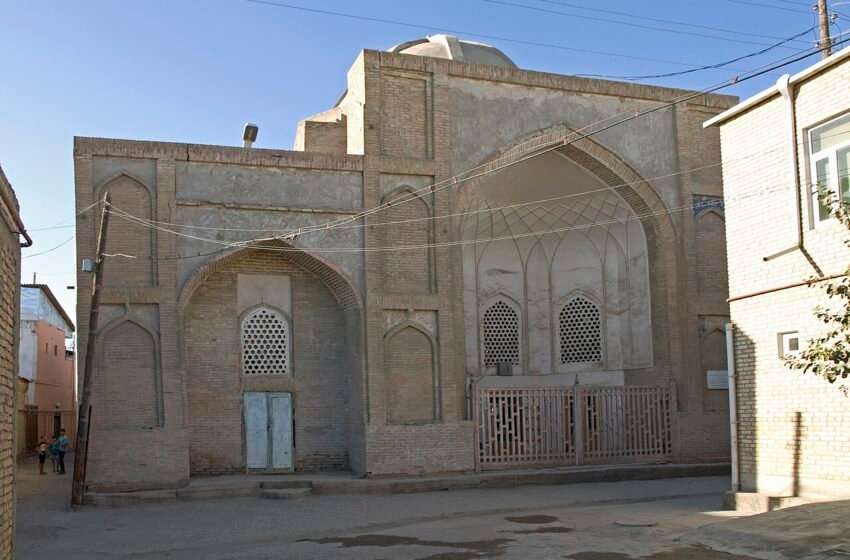
Photo: Bukhara Xoja Zayniddin Mosque.jpg by Ymblanter, Wikimedia Commons, CC BY-SA 4.0.
Khoja Zaynuddin Mosque-Khanaka is one of Bukhara’s more intimate religious monuments: a sixteenth-century complex tucked within the historic city’s residential fabric rather than displayed on a grand ceremonial square. Its importance lies in the way it brings together mosque, Sufi lodge and neighbourhood life. For visitors interested in Bukhara’s spiritual history and vernacular architecture, khoja zaynuddin bukhara offers a quieter and more concentrated experience than the city’s monumental ensembles.
Why visit Khoja Zaynuddin Mosque-Khanaka?
The complex is notable because it is identified as a mosque-khanaka: a place of prayer that also served the needs of Sufi communities. A khanaka could provide space for spiritual practice, teaching, hospitality and communal gatherings. In Bukhara, where religious institutions were deeply woven into urban life, such buildings were not isolated monuments but active parts of neighbourhoods and pilgrimage networks.
Unlike the broad façades of the Lyabi-Hauz Ensemble or the vast visual drama of the Poi Kalyan Ensemble, Khoja Zaynuddin is experienced at a more human scale. Its setting rewards patience: look closely at the transition from street to courtyard, the relationship between the domed interior and the open air, and the surviving decorative craftsmanship.
History and religious context
Available heritage descriptions place the mosque-khanaka in the sixteenth century, during a period when Bukhara was consolidating its role as a major centre of Islamic scholarship, trade and Sufi practice. The monument is associated with Khoja Zaynuddin, a religious figure connected with Bukhara’s learned and devotional circles. Sources differ in how they describe his precise role and the circumstances of the building’s foundation, so it is safest to regard the complex as a monument shaped by the religious culture of sixteenth-century Bukhara rather than attach an overly definite biography to its founder.
One local heritage account connects the mosque with the memory of Imam al-Bukhari and mentions its construction beside an old pond by a master known as Mir Dustumbiy. The same account records later work under Abdulaziz Khan and further repairs in 1904, during the reign of Abd al-Ahad Khan. These details help explain why the building should be read as a layered monument: its present appearance reflects construction, adaptation and repair across several periods.
The complex also appears in UNESCO conservation documentation concerning the Historic Centre of Bukhara. That broader context matters. Bukhara’s historic monuments have long faced the ordinary pressures of a living city, including moisture, traffic, infrastructure changes and the need to balance tourism with conservation. Khoja Zaynuddin is therefore valuable not only as an architectural object but also as part of the historic urban fabric.
Architecture and details to notice
The most important architectural clue is the central domed hall. Heritage descriptions identify this space as the principal interior associated with Sufi ceremonies. The dome gives the room a strong vertical focus, while the relatively enclosed composition creates an atmosphere very different from a large congregational mosque.
A mosque combined with a khanaka
In a conventional mosque, the emphasis is usually on congregational prayer and orientation towards the qibla. In a khanaka, the plan may also accommodate spiritual gatherings, resident or visiting dervishes, teaching and hospitality. At Khoja Zaynuddin, these functions are brought together in a compact complex. The building’s significance is consequently social as well as formal: it reflects how religious life could be organised around a shared architectural centre.
Courtyard, pond and everyday setting
Look for the relationship between the building and its open space. Accounts of the site refer to an old pond, a reminder that water was central to Bukhara’s urban and religious geography. Ponds supplied practical water, moderated the heat and became important points of social interaction. Even when a historic water feature has changed or disappeared, its presence in the story of the monument helps visitors imagine the original setting.
Pay attention to the building’s restrained exterior and the contrast with its more expressive interior spaces. Traditional Bukhara architecture often reserves its richest effects for courtyards, domes, carved wood, plasterwork and carefully framed thresholds. Depending on the condition and accessibility of the site during your visit, you may notice ganch decoration, timber details, brickwork and the geometry of the dome more clearly than from the street.
How to plan your visit
Allow around 30 to 45 minutes for the monument itself, with additional time if you are walking through the surrounding mahalla or combining it with other sites. The experience is best approached as part of a half-day exploration rather than a rushed stop between major landmarks.
- Begin in the historic centre. Use a broader Bukhara historic-centre itinerary to understand how the monument fits into the city’s older quarters.
- Visit in the cooler part of the day. Morning or late afternoon usually makes walking more comfortable, especially in warmer months.
- Approach quietly. The complex is embedded in a residential area, so avoid treating the surrounding streets as a stage for group noise or intrusive photography.
- Pair it with a contrasting monument. After the intimate mosque-khanaka, compare its scale and functions with the nearby Nadir Divan-Begi Khanaka.
Opening arrangements, access to interior rooms, conservation work and any visitor charges can change. Check locally or with your accommodation shortly before visiting. A monument that functions as a religious site may not be open in the same way every day, and access can be limited during prayer or community activities.
Etiquette, access and photography
Dress modestly, covering shoulders and knees. Remove shoes if requested before entering prayer or sacred spaces, and keep voices low. Non-Muslim visitors should follow the instructions of caretakers and avoid entering areas reserved for worshippers.
Ask before photographing people, religious activity or interior details. Photography rules may vary according to the day, the condition of the monument and whether worship is taking place. Do not use flash unless permission is clearly given. Tripods and large equipment may be impractical in the compact interior.
Expect uneven paving, thresholds and steps. Accessibility may be limited, particularly in older residential lanes and historic interiors. Visitors with mobility concerns should ask locally about the current route and whether assistance is available before setting out.
What to see nearby
Khoja Zaynuddin works well within a walking circuit of Bukhara’s old city. The Magoki Attori Mosque offers another perspective on the city’s long religious history and changing urban levels. The trading domes provide a useful contrast between devotional architecture and the commercial life that sustained Bukhara’s historic centre. For a larger sequence of monuments, continue towards Lyabi-Hauz, the trading quarters and Poi Kalyan.
If you are especially interested in Sufi institutions, compare Khoja Zaynuddin with other khanaka buildings rather than judging it only by size. The comparison reveals how patronage, neighbourhood position and religious function shaped different types of Islamic architecture in Bukhara.
Frequently Asked Questions
What is Khoja Zaynuddin Mosque-Khanaka?
It is a sixteenth-century religious complex in Bukhara combining a mosque with a khanaka, or Sufi lodge. The central domed hall is an important feature of the building.
Is Khoja Zaynuddin Mosque-Khanaka in the main tourist centre?
It is within Bukhara’s historic urban area but is set in a quieter residential quarter rather than beside one of the city’s largest public ensembles. Navigation can be easier with a local guide or a map prepared in advance.
Can non-Muslims visit?
Visitors may be welcomed when the site is open, but it remains a religious place. Access can depend on prayer times, local custom and the caretaker’s instructions. Dress modestly and ask permission before entering interior spaces.
How long should I spend there?
Plan 30 to 45 minutes for a thoughtful visit, or longer if you are studying the architectural details and exploring the surrounding neighbourhood. Verify opening arrangements shortly before arrival because they may change.
Sources and further reading
- Meros.uz: Khoja Zaynuddin Mosque, Uzbek heritage record
- Meros.uz: Khoja Zaynuddin Mosque, Russian heritage record
- UNESCO World Heritage Centre: State of Conservation of the Historic Centre of Bukhara
- UNESCO World Heritage Centre: Periodic Report on the Historic Centre of Bukhara
- app.uzbekistan.travel
- www.meros.uz
Photo: Bukhara Xoja Zayniddin Mosque.jpg by Ymblanter, Wikimedia Commons, CC BY-SA 4.0.




1 Comment
[…] Fayzabad Khanaka in context, compare it with another Sufi residence in the city by visiting the Khoja Zaynuddin Mosque-Khanaka. Its combination of mosque, khanaka traditions and neighbourhood setting makes it a useful […]