

Nadir Divan-Begi Khanaka Bukhara: Visitor Guide

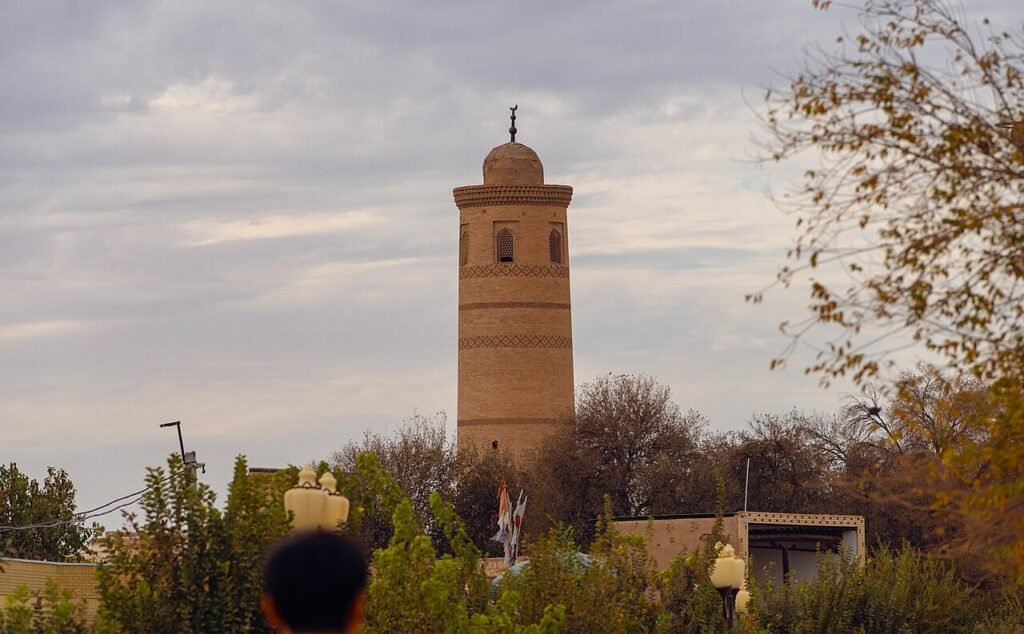
Photo: Nadir Divan Begi Khanaqa.jpg by RK, Wikimedia Commons, CC BY-SA 4.0.
Nadir Divan-Begi Khanaka is one of the most atmospheric monuments in Bukhara. Standing beside the pool of Lyabi-Hauz, the former Sufi retreat forms part of a lively historic ensemble where shaded trees, tiled façades, cafés and evening activity meet centuries of religious and commercial history. It is easy to visit alongside the neighbouring madrasa, but the khanaka deserves attention in its own right: its design reflects the spiritual, social and architectural life of seventeenth-century Bukhara.
Why visit Nadir Divan-Begi Khanaka?
The khanaka is part of the Lyabi-Hauz ensemble, usually translated as “beside the pool.” The complex brings together the Nadir Divan-Begi Khanaka, the Nadir Divan-Begi Madrasa and the larger Kukeldash Madrasa around a historic water basin. Uzbekistan’s official tourism portal describes the khanaka as a Sufi religious residence and identifies the ensemble as one of central Bukhara’s major monuments. (app.uzbekistan.travel)
For visitors, the setting is as important as the building. The pool creates a cool visual centre, while the surrounding arcades and trees offer welcome shade in Bukhara’s hot climate. The site also gives a useful introduction to the relationship between worship, hospitality, scholarship and urban life in the old city.
History and purpose
Nadir Divan-Begi Khanaka was commissioned in the early seventeenth century by Nadir Divan-Begi, a vizier serving Imamquli Khan of the Ashtarkhanid dynasty. The period was relatively stable compared with many earlier episodes in Bukhara’s history, allowing court officials and religious patrons to invest in monumental construction and urban improvements. The associated Nadir Divan-Begi complex is generally dated to the 1620s and is recognised within the Historic Centre of Bukhara. (meros.uz)
A khanaka was not simply a mosque. It was a place associated with Sufi communities, spiritual instruction, retreat and hospitality. Travelling devotees, students and religious figures could stay in such institutions, while the central hall provided a setting for prayer, remembrance and gatherings. The word is sometimes translated as a Sufi lodge, retreat or hospice, although no single English term captures its full range of functions.
The khanaka was planned together with a pool and other buildings around what became Lyabi-Hauz. This arrangement shows how water, religion and public space were interconnected in Bukhara. The pool was practical in a dry environment, but it also shaped the social life of the district, providing a shared urban focus beside commercial streets and religious institutions.
Architecture and artistic details
The building has a compact, monumental appearance, with a prominent entrance portal and a central domed hall. Around this main space are smaller rooms that served the residents and visitors of the khanaka. The arrangement is characteristic of Central Asian religious architecture, where a strong exterior façade leads into a more inward-looking composition of halls, chambers and courtyards.
Look closely at the transition between the tall portal and the dome. The architect had to move from a broad square or rectangular structure towards a rounded cupola, using intermediate forms and carefully calculated masonry. Even where decoration is restrained, the proportions, recessed arches and changes in light across the surface create considerable visual depth.
The khanaka should also be viewed in relation to the neighbouring madrasa. The two buildings were commissioned by the same patron and form a connected architectural statement, but they are not identical in purpose. The khanaka was linked to Sufi life and hospitality; the madrasa was intended for teaching and student residence. Together they express the variety of institutions that shaped Bukhara as a major centre of Islamic learning.
Some online descriptions combine the histories of the khanaka and madrasa, so visitors should be cautious when reading dates or architectural explanations on-site. The reliable distinction is that the khanaka was the Sufi lodge within the Lyabi-Hauz ensemble, while the nearby madrasa is the building with the highly figurative entrance decoration.
What to notice during your visit
1. The relationship with Lyabi-Hauz
Begin from the water rather than walking straight to the entrance. From the pool, you can understand how the khanaka anchors one side of the ensemble and how the open space softens the massive masonry. Early morning and late afternoon are especially rewarding for photography, when the façade receives gentler light and the trees cast long shadows.
2. The entrance composition
Study the portal as a whole before concentrating on individual tiles. Notice the recessed arch, the framing bands and the way the vertical entrance gives the building a ceremonial presence. Depending on conservation work and access arrangements, some interior details may be easier to appreciate from the threshold than from inside.
3. The central dome and side rooms
The dome signals the importance of the central hall, while the smaller chambers suggest the practical life of the institution. Try to imagine the khanaka not as an isolated monument but as a working religious residence connected to study, travel and local patronage.
4. The wider ensemble
Do not confuse the khanaka with the Nadir Divan-Begi Madrasa across the open space. The madrasa is famous for its portal imagery of mythical birds and animals, while the khanaka is more restrained and should be read through its plan, dome and relationship to the pool.
A realistic visit plan
Allow around 30 to 45 minutes for the khanaka itself, or about 90 minutes to two hours for the wider Lyabi-Hauz ensemble. Start with an exterior circuit around the pool, then examine the khanaka, compare it with the madrasa and finish with time beneath the trees. If you are interested in architectural photography, return at a second time of day rather than trying to see everything in one hurried stop.
- Best time: Morning is quieter and cooler; evening offers a more social atmosphere around the pool.
- What to wear: Choose respectful clothing that covers shoulders and knees, particularly if an interior religious space is open.
- Photography: Exterior photography is usually the easiest option, but interior photography, performances and portraits may be subject to local rules. Ask before photographing worshippers, staff or local residents.
- Access: Historic paving, steps and uneven thresholds may make access difficult for wheelchair users or visitors with limited mobility. Check current conditions locally before visiting.
- Opening arrangements: Access, restoration work, event schedules and any admission charges can change. Verify current arrangements shortly before your visit.
Because Lyabi-Hauz is a public gathering place, the atmosphere can change during the day. Concerts, cultural performances and other events are sometimes held in or around the ensemble, so a quiet architectural visit is best planned outside scheduled performances.
Nearby sights in Bukhara
The khanaka is well placed for a walking route through the old city. Continue towards the Lyabi-Hauz Ensemble in Bukhara for a broader explanation of the square and its surrounding monuments. From there, walk towards the Trading Domes of Bukhara, where historic covered markets connect the religious quarter with traditional craft and commercial routes.
Further west, the Poi Kalyan Ensemble provides a contrasting experience of monumental scale, with its minaret, mosque and madrasa. For a quieter architectural counterpoint, visit the Samanid Mausoleum, one of the city’s most important early Islamic monuments.
Frequently Asked Questions
Is Nadir Divan-Begi Khanaka the same as the Nadir Divan-Begi Madrasa?
No. They are neighbouring monuments within the Lyabi-Hauz ensemble and share the name of their patron, but the khanaka was a Sufi lodge, while the madrasa was an educational institution.
When was the khanaka built?
It belongs to the early seventeenth-century building programme associated with Nadir Divan-Begi. Sources commonly place the wider complex in the 1620s, although individual construction and completion dates can be presented differently.
Can visitors go inside?
Interior access depends on current management, conservation work and local events. Treat the exterior as the dependable part of the visit and confirm access on arrival.
How long should I spend at Lyabi-Hauz?
Plan at least 30 to 45 minutes for the khanaka and its immediate surroundings. Two hours allows time to see the associated madrasa, enjoy the pool and continue towards Bukhara’s markets or other historic monuments.
Sources and further reading
- Uzbekistan Travel: Lyabi-Hauz Ensemble
- Meros.uz: Nadir Divan-begi Madrasah and Khanaka
- Uzbekistan Travel: Oriental Fairy Tale of Uzbek Architecture
- whc.unesco.org
- whc.unesco.org
- uzbekistan.travel
Photo: Nadir Divan Begi Khanaqa.jpg by RK, Wikimedia Commons, CC BY-SA 4.0.




1 Comment
[…] Pair it with a contrasting monument. After the intimate mosque-khanaka, compare its scale and functions with the nearby Nadir Divan-Begi Khanaka. […]