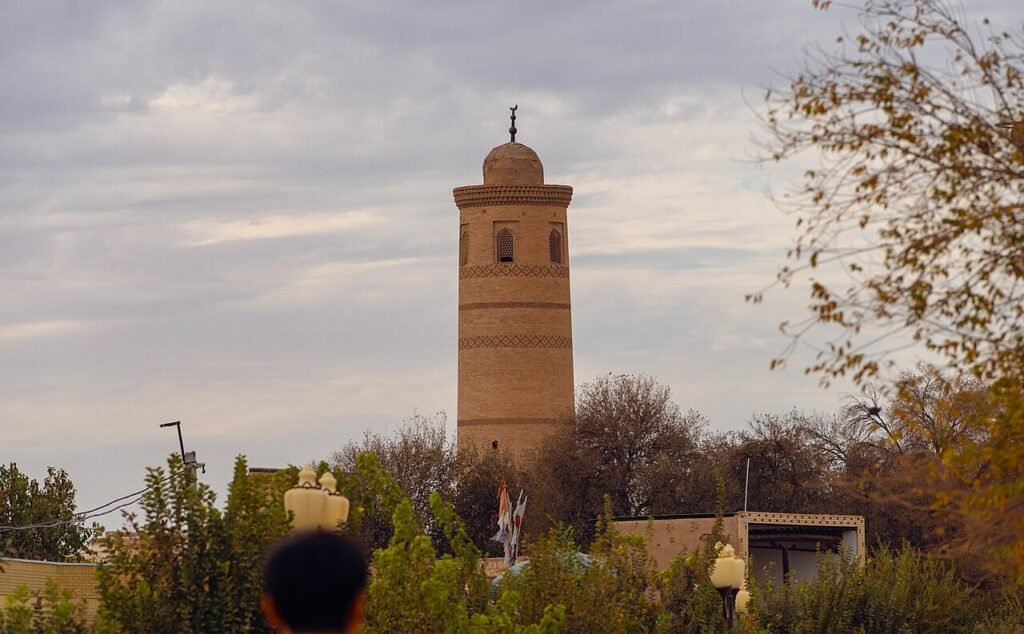

Bukhara Travel Guide: Historic Centre, Monuments and Local Life
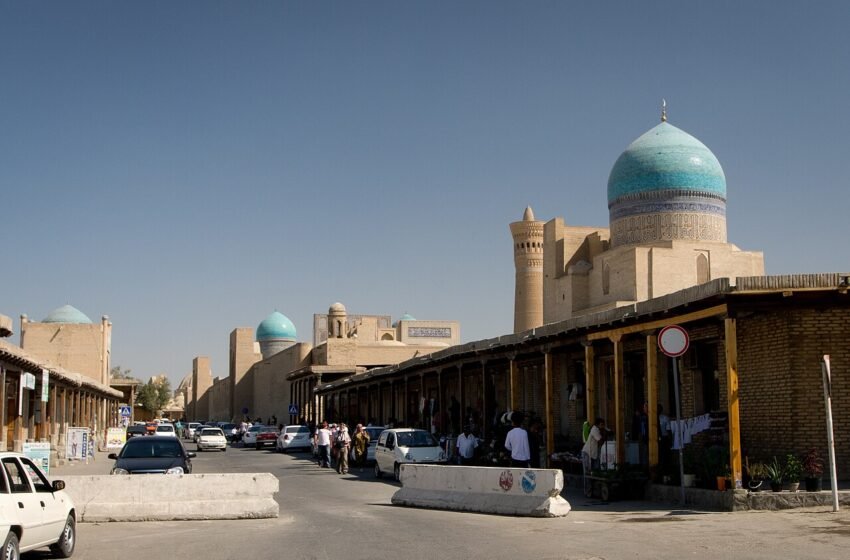
Featured photo: 2012 Bukhara 8043235697.jpg by Mats Skölving from Stockholm, Sweden, Wikimedia Commons. CC BY-SA 2.0. Resized for display.
Bukhara is one of Central Asia’s most complete historic cities, a place where monuments are woven into lanes, courtyards, trading domes and neighbourhood life rather than isolated within a single archaeological park. UNESCO describes its historic centre as an outstanding, largely intact example of a medieval Central Asian city shaped between the tenth and seventeenth centuries.
This Bukhara travel guide focuses on how to experience that urban fabric. The famous minaret, fortress and madrasas matter, but so do the distances between them, the changing scale of streets and the continued presence of crafts and worship. Two full days cover the essentials; three allow the city’s atmosphere to emerge.
Why Bukhara is historically important
Bukhara grew as a commercial and cultural centre on the Silk Roads and became a major centre of Islamic learning. Its surviving townscape reflects several periods: the Samanid and Karakhanid eras, the Timurid contribution of Ulugh Beg, and extensive construction under the Shaybanids and later rulers.
UNESCO inscribed the historic centre in 1993. Its significance lies not only in individual monuments but in the relationship between civic, commercial, residential and religious architecture. Walking is therefore the best method of interpretation: the route itself reveals how the city was organised.
The essential monuments
Start at the Ark of Bukhara, the fortified seat of rulers. Continue to Bolo Hauz and the Samanid park, where the Samanid Mausoleum demonstrates the expressive possibilities of patterned brick.
The Poi Kalyan Ensemble is Bukhara’s monumental centre, bringing together the Kalyan Minaret, Kalyan Mosque and Mir-i-Arab Madrasa. Farther east, trading domes lead toward Lyabi-Hauz, an ensemble that remains a social focus of the old city.
Madrasas, mosques and trading domes
Ulugh Beg Madrasa and Abdulaziz Khan Madrasa face one another and make a useful study in changing decorative taste. Magoki Attori preserves layers associated with one of the city’s oldest mosque sites. Chor Minor, although smaller and later, has become an icon because of its four distinctive corner towers.
Toki Zargaron, Toki Telpak Furushon and Toki Sarrafon recall specialised commercial functions. Their domed structures moderated heat and organised movement at important intersections. Shops now cater heavily to visitors, but careful browsing still reveals embroidery, metalwork, miniatures, textiles and carved objects linked to regional craft traditions.
A practical two-day route
On day one, walk from the Ark through Bolo Hauz and the Samanid Mausoleum, then return to Poi Kalyan for late-afternoon light. On day two, begin at Lyabi-Hauz, follow the trading domes toward the paired madrasas and continue to Chor Minor or a craft workshop. This direction avoids repeating the same central corridor too often.
A third day can include the Bahauddin Naqshband memorial complex, Chor Bakr, Sitorai Mokhi-Khosa or the Fayzulla Khodjaev House Museum. These sites broaden the story beyond the monumental centre. Check current transport and opening arrangements locally, especially for locations outside the walkable core.
Practical information
Most landmarks in central Bukhara are close enough to explore on foot. Begin early, rest during the hottest part of the day and return toward sunset, when brick façades gain warmer colour. Comfortable shoes are essential because paving can be uneven. Mosques, madrasas and mausoleums may have separate ticket or access rules, and restoration work occasionally changes routes. Confirm current opening hours locally and treat prayer spaces with appropriate respect.
Before you go: Opening hours, ticket prices, restoration closures and photography rules can change. Confirm current conditions at the official ticket office, museum or your accommodation. Never climb on historic fabric, and ask permission before making close portraits of residents or vendors.
Frequently asked questions
How many days are needed in Bukhara?
Two full days cover the principal monuments; three days allow museums, workshops and sites beyond the old centre.
Is the historic centre walkable?
Yes. Most major attractions are within a compact area, although summer heat and uneven paving favour a slower schedule.
When was Bukhara added to the UNESCO list?
The Historic Centre of Bukhara was inscribed in 1993.
Sources and editorial note
This independent guide was written in original language and fact-checked against the authoritative references below. It does not reproduce their text. Practical details should be rechecked close to the date of travel.
Featured photo: 2012 Bukhara 8043235697.jpg by Mats Skölving from Stockholm, Sweden, Wikimedia Commons. CC BY-SA 2.0. Resized for display.