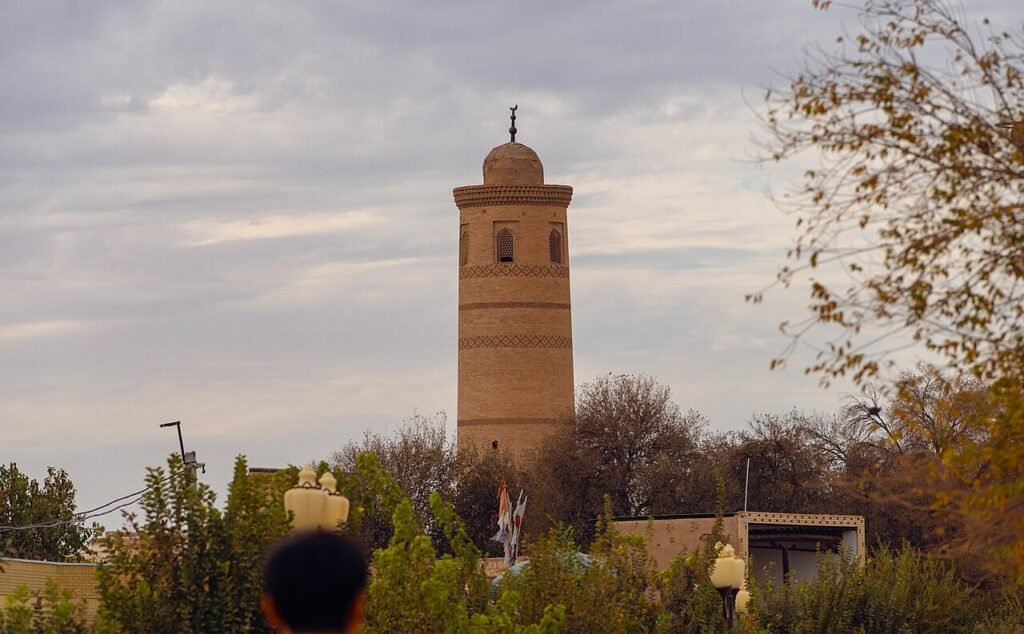

Talipach Gate Bukhara: History and Visitor Guide

Photo: 55 Talipoch fortress gate 109.jpg by BeshevI, Wikimedia Commons, CC BY-SA 4.0.
Talipach Gate Bukhara is one of the clearest surviving reminders that the old city was once enclosed by substantial defensive walls. Standing north of the historic centre, the gate marked the route towards Khorezm and the northern caravan roads. It is not a large museum monument with a long interior route, but it is an atmospheric place to pause, study Bukhara’s fortification traditions and imagine the movement of merchants, officials and travellers through the city.
Why Talipach Gate matters
Bukhara developed as a major political, religious and commercial centre of Central Asia, and its walls expressed that importance as much as its mosques, madrasas and bazaars did. Talipach was one of the entrances through which people and goods passed between the city and the wider region.
The surviving structure is especially valuable because so much of Bukhara’s historic defensive circuit has disappeared. Official heritage material identifies Talipach Gate and the remains of the old walls as part of the historic fortification landscape, while UNESCO documentation describes the gate as opening the way towards Khorezm. Along with Karakul Gate, it is among the principal surviving city gates associated with Bukhara’s historic walls.
For visitors, the gate offers a different perspective from the densely ornamented monuments around Lyabi-Hauz or Poi Kalyan. Its importance lies in its urban role: this was an entrance, checkpoint and threshold between the settled city and the roads beyond it.
History and setting
The gate belongs to the period when Bukhara’s defensive system was expanded during the sixteenth century. Uzbekistan’s official tourism information dates the beginning of construction of the northern Talipach Gate to the second half of the sixteenth century, under Abdulla Khan II, and states that the work continued for nine years.
That account also preserves a revealing detail about how large public works could be organised. The ruler is said to have financed the purchase of building materials, while residents were required to contribute labour. Whether every detail of this traditional account can be independently reconstructed today, it reflects the gate’s place within the civic life of Bukhara: the walls were not isolated monuments but shared infrastructure protecting homes, markets, workshops and religious institutions.
The wider fortifications were built mainly from compacted earth and earthen ramparts rather than the finely finished tilework associated with many central monuments. One official description gives the walls a substantial width and an overall circuit extending for several kilometres. Such measurements should be treated as historical or descriptive figures rather than a complete guide to what remains visible on the ground today.
Talipach’s location on the northern side of Bukhara also explains its strategic importance. The gate controlled movement along the northern approach, including routes connected with Khorezm. In a city sustained by caravan trade, controlling access was both a military and an economic responsibility.
What to notice
The defensive character
Look first at the gate as a piece of fortification rather than as a decorative façade. Its mass, compact form and relationship to the surviving or reconstructed wall sections communicate a practical purpose. The architecture was meant to regulate passage and strengthen the city boundary.
The threshold between city and road
Try to read the site geographically. Inside the gate lay Bukhara’s dense urban world of neighbourhoods, mosques, schools and markets. Outside began the approach roads and the wider landscape. That contrast is central to understanding why city gates mattered in pre-modern Central Asia.
The wider heritage landscape
Talipach Gate is best understood together with the historic centre, not as an isolated object. Bukhara’s protected heritage includes monumental religious architecture, trading domes, mausoleums and urban spaces that developed around the same commercial and civic system. A visit to the gate can therefore add useful context to a day spent exploring the central monuments.
Planning your visit
Allow: Around 20–40 minutes for the gate itself, depending on how long you spend photographing the structure and observing the surrounding walls. Add more time if you are combining it with other northern Bukhara sights.
Getting there: The gate lies outside the most concentrated cluster of central monuments, so many visitors reach it by taxi or by combining it with a broader walking or driving route around the historic city. Confirm the exact drop-off point locally, since street access and traffic arrangements can change.
Best time: Early morning or late afternoon usually provides softer light and more comfortable temperatures. Bukhara can be intensely hot in summer, while the open setting around the walls offers limited shade.
Entry and access: Talipach Gate is primarily an exterior heritage stop. Opening arrangements, nearby access, restoration activity and any temporary restrictions can change. Verify current conditions shortly before visiting through your accommodation, local guide or official tourism channels. Uneven ground may make the area difficult for visitors using wheelchairs or those with limited mobility, and the monument should be viewed from the safe public approach if the structure itself is not open.
Photography: Exterior photography is generally the main reason to bring a camera, but respect barriers, conservation work and residents’ privacy. Do not climb on walls or touch fragile masonry. If a local religious or commemorative activity is taking place nearby, ask before photographing people.
Nearby ideas
Use Talipach Gate as an introduction or conclusion to a wider Bukhara heritage route. The Kalyan Minaret and the Poi Kalyan Ensemble show the city’s monumental religious architecture, while the Trading Domes of Bukhara help explain the commercial world that made controlled city entrances so important. For a broader orientation before setting out, see the Bukhara Travel Guide.
If you have more time, compare the gate with Bukhara’s other surviving defensive entrance, Karakul Gate, and look for the fragments of wall that survive beyond the main tourist circuit. The comparison helps show how much of the historic fortification network has been lost and why the remaining sections deserve careful treatment.
Frequently Asked Questions
What is Talipach Gate?
Talipach Gate is a surviving northern entrance of historic Bukhara. It formed part of the city’s defensive walls and controlled access to routes leading north towards Khorezm.
When was Talipach Gate built?
Official Uzbekistan tourism information places its construction in the second half of the sixteenth century, during the rule of Abdulla Khan II, with construction lasting nine years.
Is Talipach Gate inside Bukhara’s historic centre?
It is associated with the protected historic urban and fortification landscape but stands away from the densest cluster of central monuments. Plan it as a separate stop or as part of a route around the city walls.
How long should I spend there?
Most visitors need about 20–40 minutes for the gate itself. Allow longer if you are walking nearby, studying the wall remains or combining the visit with other northern Bukhara sites.
Sources and further reading
- Uzbekistan Travel: Talipoch Gate and historic monuments
- UNESCO World Heritage Centre: Historic Centre of Bukhara documentation
- UNESCO World Heritage Centre: Historic Centre of Bukhara conservation report
- uzbekistan.travel
- uzbekistan.travel
- www.meros.uz
Photo: 55 Talipoch fortress gate 109.jpg by BeshevI, Wikimedia Commons, CC BY-SA 4.0.