
Bozori Kord Hammam Bukhara: A Visitor Guide
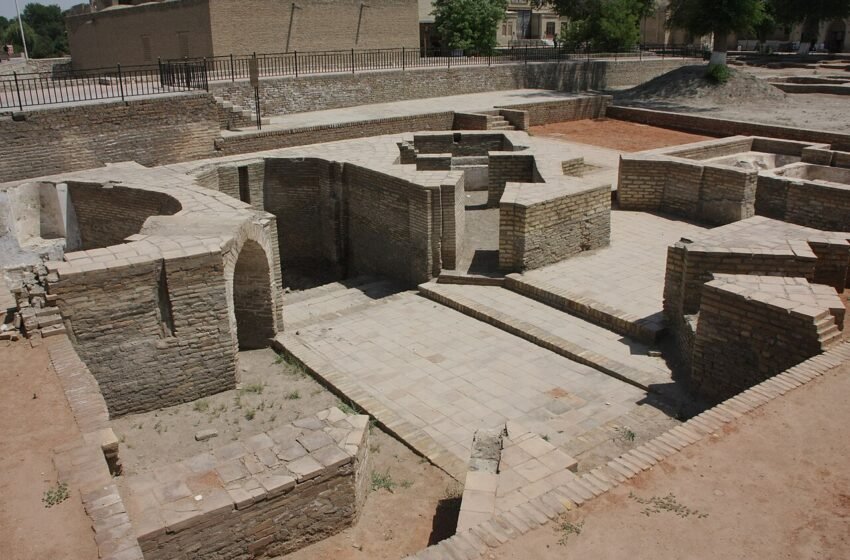
Historical bathhouse remains in Bukhara illustrate the city’s bathing heritage. This contextual photograph does not show the operating Bozori Kord hammam. Photo: Ancient hammam, Bukhara.jpg by Davide Mauro, Wikimedia Commons, CC BY-SA 4.0.
Historical bathhouse remains in Bukhara illustrate the city’s bathing heritage. This contextual photograph does not show the operating Bozori Kord hammam.
Bozori Kord Hammam Bukhara is one of the city’s most atmospheric historic buildings: a traditional bathhouse concealed within the dense urban fabric of the old town. Rather than presenting a grand façade, it reveals Bukhara’s historic life through vaulted rooms, controlled heat, water channels and the social customs of the hammam. It is best understood as part of the city’s commercial and civic landscape, close to the old trading streets and other monuments in Bukhara’s UNESCO-listed historic centre.
Why visit Bozori Kord Hammam?
Bukhara is often associated with monumental mosques, madrasas, minarets and domed bazaars. A hammam offers a different perspective. It belongs to the everyday infrastructure of the historic city: a place where residents could wash, rest, meet acquaintances and prepare for social or religious occasions.
That makes Bozori Kord valuable not only as an architectural monument but also as a reminder that historic Bukhara was a lived city. Its importance lies in the relationship between building, climate and custom. In a hot, dry environment, a public bath was a practical necessity as well as a social institution.
Official Uzbek tourism material lists the old Bukhara hammam within a walking itinerary that also includes the trading domes, Toki Sarrafon, Magoki Attori Mosque and the Lyabi-Hauz ensemble. This context is important: the bathhouse was part of a busy urban quarter rather than an isolated ceremonial structure. The Trading Domes of Bukhara provide a useful companion visit.
History and historical setting
Bozori Kord is commonly described in tourism accounts as a bathhouse around 350 years old. That description places its origins broadly in the early modern period, when Bukhara was an important centre of trade, scholarship and Islamic culture. However, the precise construction date and the meaning of the name should be treated cautiously unless confirmed by a monument register or current local interpretation.
The building forms part of the wider historic centre of Bukhara, which UNESCO inscribed on the World Heritage List in 1993. UNESCO conservation documentation specifically records work at the Bozori-Kord Bath-House, including the clearing and conservation of channels and structural reinforcement of its load-bearing walls. This is a useful reminder that the hammam is not simply an old shell; its survival has required continuing technical care.
Bathhouses in the Islamic world generally served several overlapping purposes. They supported personal hygiene, offered a place to relax and helped maintain the rhythms of urban life. Visitors should avoid imagining the building only as a spa in the modern sense. A historic hammam was also a neighbourhood institution, connected to markets, religious buildings, inns and residential quarters.
Architecture and what to notice
Bozori Kord is a building to experience through its interior sequence rather than its exterior elevation. Historic Central Asian bathhouses were often partly recessed or built with discreet entrances, helping preserve heat and giving them a modest street presence. The domed and vaulted spaces were designed to manage temperature, humidity and movement between rooms.
Look for the logic of the rooms
- Transition spaces: A bathhouse normally moved visitors gradually from the street into warmer areas, reducing the shock of temperature changes.
- Domed ceilings: Vaults and domes created spacious interiors while supporting a strong masonry structure.
- Small openings: Roof openings or carefully placed apertures could admit limited light while helping retain heat and privacy.
- Water management: Channels, drains and service spaces were essential to the building’s function. UNESCO records conservation work on these systems at Bozori-Kord.
- Surface texture: Plain plaster, brick, worn thresholds and rounded vaults can be as revealing as tilework in a madrasa.
The atmosphere may be more significant than any single decorative feature. Notice how thick walls suppress street noise, how the light changes beneath the domes and how the plan directs the body from one temperature zone to another. These qualities explain why a hammam can feel more intimate than Bukhara’s open courtyards and monumental squares.
For contrast, visit the nearby Magoki Attori Mosque, where archaeology, sunken levels and richly decorated historic masonry tell a very different story about the same dense urban environment.
How to plan your visit
Allow around 30–60 minutes if you are seeing the hammam as a heritage site, or longer if the establishment is operating as a working bathhouse and you intend to use its services. The realistic experience depends on the current function of the building, the time of day and whether you arrive with a guide.
- Begin near the central historic quarter and walk through the trading streets rather than treating the hammam as a stand-alone stop.
- Read the entrance information carefully. Some historic bathhouses have changing access arrangements or operate only at particular times.
- Ask before entering service areas, treatment rooms or spaces used by local customers.
- Take time to observe the building’s transitions, masonry and water infrastructure rather than rushing through for photographs.
- Combine the visit with Toki Sarrafon, Magoki Attori and Lyabi-Hauz for a coherent half-day route.
Opening hours, admission arrangements, treatment availability and prices can change. Verify current details locally or through your accommodation shortly before visiting. Do not assume that a historic bathhouse follows museum opening hours or that every visitor may use the bathing facilities.
Etiquette, access and photography
A hammam is a functioning personal space as well as a heritage building. Dress and behave discreetly, follow staff instructions and expect gender-specific schedules or facilities where these are in place. If you plan to bathe, ask what is included, whether towels and toiletries are provided, and whether payment is by service or by time.
Photography may be restricted, especially in changing rooms, bathing areas or during treatments. Always ask before photographing staff or other guests. Even where photography is permitted, avoid using flash in confined interiors and do not block entrances, corridors or working areas.
Accessibility may be difficult. Historic bathhouses can have narrow passages, uneven floors, steps, low doorways and limited seating. Visitors with mobility, balance or health concerns should ask in advance about the entrance route and whether the current facilities are suitable. Heat and humidity may also be challenging for some travellers; leave immediately if you feel unwell.
Nearby places to combine with the hammam
Bozori Kord works best within a walking circuit through central Bukhara. Consider the following combinations:
- Lyabi-Hauz Ensemble for a shaded urban square, historic ponds and lively evening atmosphere.
- The trading domes and Toki Sarrafon for an understanding of commerce, craft and movement through the old city.
- Magoki Attori Mosque for an archaeological and architectural counterpoint close to the hammam.
- The wider Bukhara historic centre for route planning, practical orientation and ideas beyond the central monuments.
For a broader architectural day, continue towards the Poi Kalyan ensemble or the Ark, but allow extra time and water in warm weather. The hammam is most rewarding when visited slowly, as part of the city’s layered urban fabric rather than as a quick checklist attraction.
Frequently Asked Questions
What is Bozori Kord Hammam?
It is a historic public bathhouse in Bukhara’s old city. It represents the practical, social and architectural traditions of the hammam in Central Asia.
How old is Bozori Kord Hammam?
Tourism accounts often describe it as approximately 350 years old, but visitors should treat that as a broad traditional or promotional dating rather than a fully verified construction date.
Can tourists use the bathhouse?
Possibly, depending on its current operation, schedule and visitor policy. Confirm services, gender arrangements, prices and opening times locally before planning a bathing session.
Is photography allowed?
Rules can vary by room and by current use. Ask permission before photographing, and never photograph other guests without their consent.
Sources and further reading
- UNESCO conservation report: Historic Centre of Bukhara
- Uzbekistan Travel: Bukhara four-day itinerary
- Uzbekistan Travel: New York Times feature mentioning Bozori Kord Hammam
- UNESCO: Uzbekistan World Heritage properties
- app.uzbekistan.travel
- uzbekistan.travel
Historical bathhouse remains in Bukhara illustrate the city’s bathing heritage. This contextual photograph does not show the operating Bozori Kord hammam. Photo: Ancient hammam, Bukhara.jpg by Davide Mauro, Wikimedia Commons, CC BY-SA 4.0.