

Bahouddin Naqshband Memorial Complex Bukhara: Pilgrimage Guide

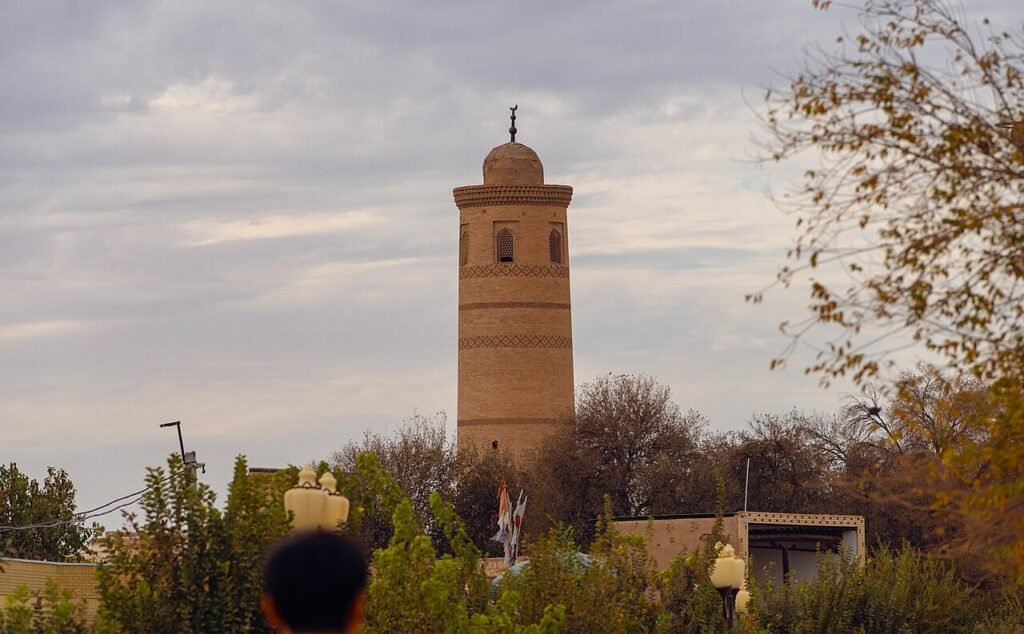
Photo: Bahauddin Naqshband Memorial Complex. Bukhara.jpg by Umid1108, Wikimedia Commons, CC BY-SA 4.0.
The Bahouddin Naqshband complex Bukhara is one of Uzbekistan’s most important pilgrimage destinations. Set outside the historic centre near the village of Qasri Orifon, the memorial honours the fourteenth-century Sufi teacher Bahouddin Naqshband and brings together a mausoleum, khanaka, mosques, a minaret, courtyards, gardens and a historic necropolis. It is both a place of living religious devotion and an architectural site shaped by centuries of Bukhara’s rulers, scholars and pilgrims.
Why visit the complex?
For Muslims, the shrine is a place of prayer, remembrance and spiritual connection with one of Central Asia’s most influential Sufi masters. For other visitors, it offers an opportunity to understand how religious traditions, local architecture and dynastic history developed together around Bukhara.
The site is not simply a single tomb. Its buildings form a layered ensemble, with the central burial place surrounded by structures added or remodelled over several centuries. The atmosphere is generally quieter and more contemplative than the busy monuments of central Bukhara, although the complex can become lively during religious gatherings, holidays and periods of increased pilgrimage.
The memorial lies roughly 12 kilometres from Bukhara, making it a practical half-day excursion. It can also be combined with other sites outside the city, including the Chor-Bakr Necropolis Bukhara, if you are arranging a broader pilgrimage and heritage itinerary.
Bahouddin Naqshband and the Naqshbandi tradition
Bahouddin Naqshband was born near Bukhara in 1314 and died in 1389. He became the formative figure of the Naqshbandi Sufi path, a tradition that later spread across Central Asia, South Asia, the Middle East and parts of the Ottoman world.
His teaching placed strong emphasis on inward remembrance of God, disciplined religious practice and participation in ordinary life. The tradition is especially associated with silent dhikr, or quiet remembrance, rather than public displays of devotion. A phrase commonly linked with Naqshbandi spirituality is “the heart with God, the hands at work,” expressing the ideal of combining spiritual awareness with useful daily activity.
Accounts of Naqshband’s life include both historical traditions and later devotional narratives. Visitors should therefore treat popular stories about miraculous events or the powers of particular objects as expressions of belief rather than automatically verifiable historical facts. The enduring importance of the site rests on Naqshband’s religious influence and the continuity of pilgrimage to his grave.
Architecture and what to notice
The mausoleum and dahma
The focal point is the burial monument, traditionally described as a dahma—an elevated funerary platform enclosed by a carved marble screen. The present appearance reflects historical construction, restoration and later landscaping, so it is best understood as a monument with several chronological layers rather than a building from one period.
Approach the burial area quietly and observe how the shrine is framed by open courtyards and shaded terraces. The transition between enclosed sacred space and garden creates a calm sequence for pilgrims moving towards the tomb.
The Abdulaziz Khan khanaka
One of the ensemble’s most significant buildings is the khanaka associated with Abdulaziz Khan. A khanaka served as a residence and gathering place for Sufi communities and travelling devotees. Its broad composition, domed spaces and attached cells reflect the need to accommodate prayer, teaching, hospitality and communal life.
Look closely at the vaulting and decorative surfaces. The building’s visual interest comes not only from its façade but also from the way its domes, arches and interior ornament create a sense of vertical movement. Restoration has been important to the survival of the complex, but some surfaces and arrangements may differ from their historic state.
Mosques, minaret and water structures
The complex includes historic mosques linked with different periods of Bukhara’s history, as well as a small minaret and traditional open-sided ayvan terraces. Painted ceilings, carved wooden elements and slender columns are among the details worth noticing. Take time to look upward: the ceilings of the ayvans often provide a more intimate decorative experience than the monumental façades.
Water has also played a symbolic and practical role in the site. A pool and a small structure associated with drinking water contribute to the ensemble’s traditional courtyard character. Modern facilities and landscaped areas have been added or renewed in recent years, so the visitor experience may continue to change.
The rulers’ necropolis
To the west of the main shrine is a large cemetery associated with Bukhara’s ruling dynasties. The necropolis includes burials connected with the Shaybanid, Ashtarkhanid and Manghit periods. This area helps explain why the complex became more than a local shrine: it also served as a prestigious dynastic and religious landscape.
Planning your visit
Allow at least two hours for the complex if you want to move slowly, observe prayers respectfully and examine the architectural details. A longer visit is worthwhile for photographers, students of Islamic architecture and travellers interested in Sufism.
- Getting there: Arrange a taxi, private driver or organised excursion from Bukhara. Confirm the route and return arrangement before leaving the city.
- Best timing: Early morning or late afternoon usually offers softer light and a calmer atmosphere, but religious activity may vary by day.
- What to wear: Choose modest clothing covering shoulders and knees. Women may wish to carry a light scarf, especially when entering prayer spaces.
- What to bring: Water, sun protection and comfortable footwear are useful, particularly in hot weather and across large courtyards.
- Time for interpretation: Read about Naqshbandi history before arriving; the site is easier to appreciate when its spiritual context is understood.
Opening hours, access arrangements, museum availability and photography rules can change. Verify current conditions locally or through an official tourism source shortly before travelling, especially during religious holidays, restoration campaigns or state visits.
Etiquette, access and photography
This is an active pilgrimage site, not only a historic monument. Keep voices low near the tomb, avoid interrupting prayers and follow instructions from caretakers. Do not touch funerary structures, enter restricted areas or treat worshippers as photographic subjects without permission.
Photography may be possible in some outdoor areas, but rules can differ between courtyards, mosques, museums and the mausoleum. Ask before photographing people, religious ceremonies or interior details. Tripods and commercial photography may require additional permission.
Accessibility can be uneven. Some paths and courtyards may be manageable for visitors with limited mobility, while thresholds, historic paving and steps can present difficulties. Travellers who need step-free access should confirm conditions in advance and consider visiting with a companion or local guide.
Nearby ideas
Return to central Bukhara for the city’s major historic ensembles. The Bukhara Travel Guide is useful for building a wider itinerary around the old town, bazaars and local life.
For a second religious and architectural perspective, compare the Naqshband complex with the Samanid Mausoleum, whose compact brick architecture belongs to a much earlier period. The Poi Kalyan Ensemble provides a contrasting urban setting, where congregational worship, madrasa education and the famous minaret are concentrated in the heart of the old city.
Frequently Asked Questions
How far is the Bahouddin Naqshband complex from Bukhara?
The complex is approximately 12 kilometres from Bukhara, near Qasri Orifon in the Bukhara region. Travel time depends on traffic, road conditions and the type of transport used.
Is the complex suitable for non-Muslim visitors?
Yes, non-Muslim visitors can generally visit as cultural travellers, provided they respect the site’s religious function, dress modestly and follow local instructions. Some areas may be reserved for worshippers.
Can I take photographs?
Outdoor photography may be permitted, but rules can vary by area and occasion. Ask staff before photographing interiors, worshippers, ceremonies or museum displays, and do not assume that flash or professional equipment is allowed.
How much time should I allow?
Plan around two hours for a thoughtful visit. Add time if you intend to visit a museum, explore the necropolis, pray, or combine the complex with another site outside Bukhara.
Sources and further reading
- Uzbekistan Travel: Bahouddin Naqshband Complex
- Meros: Memorial Complex of Bakhouddin Naqshband
- Directorate for Important Cultural and Historical Sites: Bahouddin Naqshband Memorial Complex
- Government of Uzbekistan: Presidents Visit Bahauddin Naqshband Mausoleum
- dkm.gov.uz
- gov.uz
Photo: Bahauddin Naqshband Memorial Complex. Bukhara.jpg by Umid1108, Wikimedia Commons, CC BY-SA 4.0.




1 Comment
[…] planning a longer cultural route may also visit the Bahouddin Naqshband Memorial Complex. Together, these places show the range of Bukhara’s heritage: dynastic authority, religious […]