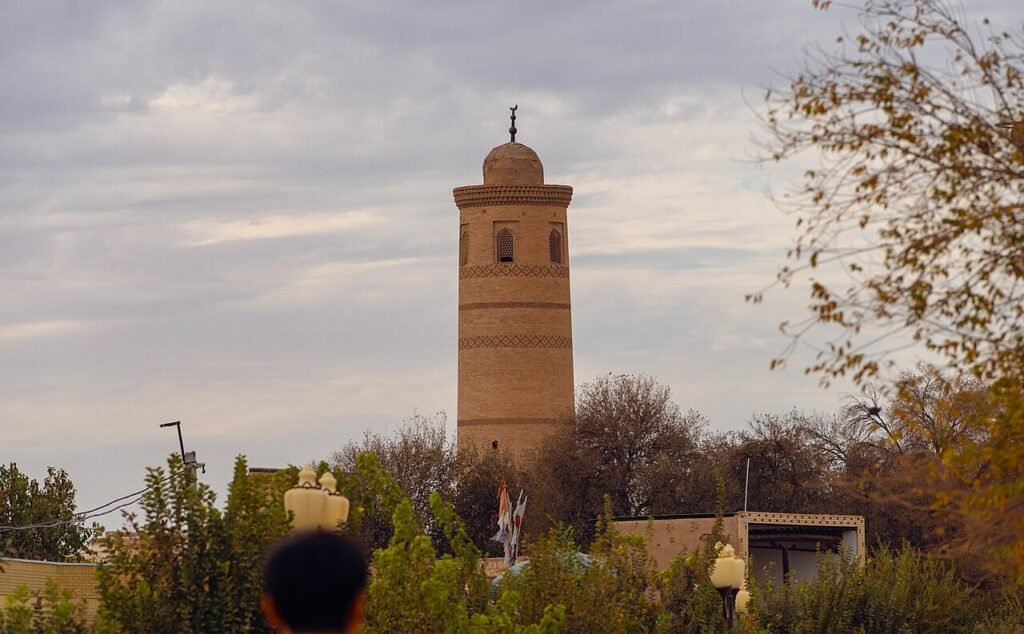

Sayid Alauddin Mausoleum in Khiva: Visitor Guide
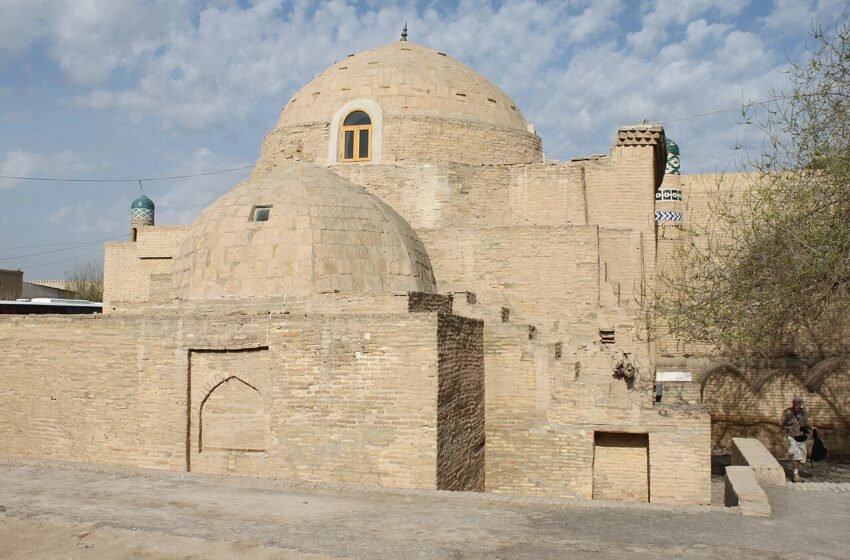
Photo: Sayid Alaouddine mausoleum general view from outside.JPG by Faqscl, Wikimedia Commons, CC BY-SA 3.0.
Sayid Alauddin Mausoleum Khiva is one of the quieter sacred monuments inside Itchan Kala, the walled historic centre of the city. Its exterior is modest, but the interior contains an exceptional glazed-tile cenotaph and preserves a long connection with Khorezm’s Sufi traditions. For visitors, the mausoleum offers a useful reminder that Khiva’s heritage is not limited to grand madrasas, minarets and palaces.
Why visit the mausoleum?
Sayid Alauddin Mausoleum is included among the historic monuments of Itchan Kala, a UNESCO World Heritage property that contains an unusually concentrated collection of Islamic architecture, traditional houses, markets and religious buildings. Unlike Khiva’s most visually dominant landmarks, this mausoleum rewards a slower visit. Its importance lies in the relationship between a plain brick exterior, a devotional interior and the finely ornamented grave monument within.
The site is also valuable for understanding Khiva as a pilgrimage city. Mausoleums connected with respected scholars, saints and Sufi figures formed part of the spiritual landscape of the old town. Sayid Alauddin’s tomb continues to be regarded as a place of visitation, so it should be approached as a religious monument as well as a historic building.
History and religious context
Sayid Alauddin is described in local historical traditions as a prominent religious figure and Sufi sheikh who preached in Khiva. Sources commonly state that he died in 1303. The mausoleum is generally associated with the fourteenth century, although the precise date of its original construction is not fully certain. One established account says that it was built several decades after his death.
The building has been restored and altered more than once. This helps explain why its present appearance combines an old core with later interventions. The mausoleum is usually understood as consisting of a gurkhana, or burial chamber, and a ziyaratkhana, the space used for visitation and prayer. A small square visitation room was added during the nineteenth century, changing the arrangement of the entrance.
Local tradition identifies Amir Kulal as the architect or patron associated with the mausoleum. He is remembered as a disciple of Sayid Alauddin and as an important figure in the history of Central Asian Sufism. Because accounts differ in their terminology and details, visitors should treat the attribution as a traditional historical association rather than as a fully documented modern architectural record.
Architecture and decoration
From outside, the mausoleum is deliberately restrained. Its small mass is built largely of brick, with simple walls and domed forms rather than the extensive mosaic façades seen at many of Khiva’s madrasas. The austerity is part of the monument’s character. It reflects a devotional building intended for remembrance and pilgrimage rather than a royal showcase.
The most important artistic feature is inside the burial chamber: a glazed ceramic dahma, or raised tomb monument. Its surface is covered with richly coloured tiles in shades of green, blue, turquoise and white. Floral motifs appear in relief, giving the decoration a tactile quality that differs from the flatter geometric tilework familiar from many Central Asian monuments.
This contrast between architecture and interior decoration is one of the mausoleum’s defining qualities. The outer building can appear almost austere, while the cenotaph is delicate, colourful and highly worked. The tilework is especially important because it belongs to an older decorative tradition and is considered unusual within Khiva. Comparable techniques are often discussed in connection with major sacred monuments at Kunya-Urgench and Samarkand, although the exact artistic relationships should be treated cautiously.
What to notice inside
The tiled cenotaph
Spend time looking closely at the dahma rather than viewing it only as a whole. Notice the repeated floral patterns, the raised ornament and the contrast between coloured tile fields and pale inscriptions. The decoration is intimate in scale, so it is best appreciated from a short distance and in steady light.
The relationship between the two chambers
Try to distinguish the burial space from the area intended for visitors. This simple division reflects the practical and spiritual function of the monument. The building is not just a tomb but also a place where pilgrims could pause, pray and honour the memory of the deceased.
Evidence of restoration
Later repairs are part of the monument’s history. Accounts of a major restoration in 1825, during the reign of Allakuli Khan, describe work on the damaged entrance, interior niches, flooring and plastered walls. A Persian inscription of fourteen lines was also recorded in connection with the restoration. Not every historical feature described in older documentation is necessarily easy to identify during a short visit, but the layered character of the building is worth keeping in mind.
Planning your visit
The mausoleum stands within Itchan Kala, so most visitors reach it on foot while exploring the old city. It works well as a short stop between larger monuments rather than as a separate half-day excursion. Allow approximately 15 to 30 minutes for the mausoleum itself, with extra time if the building is being used for prayer or if you want to study the tilework carefully.
- Visit earlier in the day or later in the afternoon for a calmer atmosphere and softer light.
- Combine it with a broader walk through Itchan Kala, including its lanes, walls and major monuments.
- Carry water and wear comfortable shoes; historic surfaces can be uneven.
- Check the current Itchan Kala ticket arrangements and any monument-specific access rules shortly before visiting, as these can change.
If you are interested in Khiva’s sacred architecture, compare this compact shrine with the more elaborate Pahlavan Mahmud Mausoleum. For a broader view of the old city’s defensive setting, the Khiva City Walls and Watchtowers guide can help you plan the surrounding walk.
Etiquette, access and photography
Dress modestly and behave quietly. Shoulders and knees should be covered, and visitors should avoid loud conversation, eating or treating the mausoleum as a casual photo backdrop. If worshippers are present, give them priority and wait for a suitable moment before entering or taking photographs.
Photography rules can vary by monument, caretaker and current conservation conditions. Ask before photographing the interior, inscriptions or people. Do not touch the tiled cenotaph, lean against historic surfaces or use flash unless permission is clearly given.
Accessibility is likely to be limited by the historic building’s small rooms, thresholds and uneven approach. Visitors with mobility concerns should ask locally about the current entrance conditions before relying on independent access. Because restoration and conservation work may occasionally affect entry, verify conditions on the day.
Nearby places to combine
Sayid Alauddin Mausoleum is best understood as one part of a compact heritage landscape. Nearby visits can include the Juma Mosque, whose carved wooden columns create a very different interior atmosphere, and the Islam Khoja Complex, where a madrasa, mosque and tall minaret illustrate the later architectural ambitions of Khiva.
Allow time simply to walk between monuments. The narrow streets, mud-brick walls, shaded passages and changing views of domes and minarets are essential to the experience of Itchan Kala. A visit to the mausoleum becomes more meaningful when placed within this living urban fabric rather than treated as an isolated attraction.
Frequently Asked Questions
Where is Sayid Alauddin Mausoleum?
It is inside Itchan Kala, the historic walled city of Khiva in Uzbekistan. It can be visited as part of a walking route through the old town.
Who was Sayid Alauddin?
He is remembered in Khorezm tradition as a respected religious scholar and Sufi sheikh associated with Khiva. Sources commonly give his death as 1303, although details of his biography vary between historical accounts.
What is the main feature to see?
The principal feature is the glazed-tile dahma in the burial chamber. Its green, blue, turquoise and white floral decoration contrasts strongly with the mausoleum’s plain brick exterior.
Can visitors take photographs?
Photography may be possible, but rules can change and may be stricter inside a sacred building. Ask the caretaker first, avoid flash unless permitted and never photograph worshippers without consent.
Sources and further reading
- UNESCO World Heritage Centre: Itchan Kala
- Meros.uz: Sayid Allauddin Mausoleum, Khiva
- Meros.uz: Sayid Olovuddin Mausoleum, historical description
- whc.unesco.org
- www.meros.uz
- www.meros.uz
Photo: Sayid Alaouddine mausoleum general view from outside.JPG by Faqscl, Wikimedia Commons, CC BY-SA 3.0.