
Chashma Ayub Mausoleum in Bukhara: History and Visitor Guide
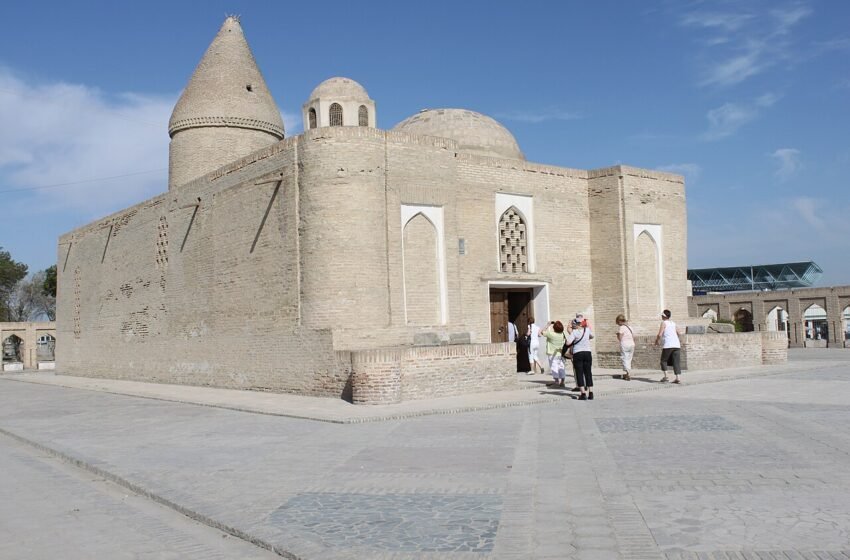
Photo: Faqscl / Wikimedia Commons. CC BY-SA 3.0. Source: https://commons.wikimedia.org/wiki/File:Chashma-Ayub_Mausoleum_outside_view_2.JPG License: https://creativecommons.org/licenses/by-sa/3.0
Chashma Ayub, meaning “Job’s Spring,” is a compact but architecturally unusual monument near the Samanid Mausoleum in Bukhara. Its sequence of brick chambers and distinctive conical dome developed across several construction periods around a well associated by tradition with the Prophet Job, or Ayub.
The building brings together sacred legend, pilgrimage, water history and architectural exchange with Khorezm. Today it is also associated with a museum devoted to Bukhara’s water supply, making the site valuable for understanding how the oasis city depended on wells, canals and reservoirs.
The legend of Job’s spring
Local tradition tells that Job struck the ground with his staff and brought forth water for people suffering from drought. The spring became associated with healing and blessing, and the site developed as a place of reverence. The legend is part of the monument’s cultural history even though it cannot be read as a dated archaeological event.
Visitors may still see people treating the place with devotional respect. Avoid dismissing the tradition or turning religious practice into a photograph. The distinction between faith, oral history and documented construction can be explained without reducing the meaning the site holds for local communities.
A building formed over centuries
Chashma Ayub is not the product of one building campaign. Elements belong to different periods, with important work associated with the late fourteenth century and craftsmen linked to Khorezm. The long rectangular plan and series of domed rooms reveal additions around the sacred core.
The tall conical or tent-like dome is rare in Bukhara and gives the silhouette its identity. Outside, restrained brick surfaces contrast with the patterned Samanid Mausoleum nearby. Inside, spatial changes between chambers communicate the building’s gradual growth more clearly than abundant decoration would.
Water and the oasis city
Bukhara’s survival depended on managing limited water in a dry environment. Historic hauz reservoirs, channels, wells and water carriers supported households, worship and commerce, while contaminated water could also transmit disease. A water-focused display inside Chashma Ayub places the sacred spring within that practical urban story.
Exhibitions and access arrangements can change, so confirm locally whether the museum is open. Even without a full display, the well, chamber sequence and architecture justify the visit. Labels may be limited, making the historical context in this guide useful before arrival.
Combining Chashma Ayub with nearby monuments
The monument stands close to the Samanid Mausoleum. Visit both in the same walk, then continue toward Bolo Hauz and the Ark. The contrast between patterned brick, conical dome and fortress walls makes this one of Bukhara’s strongest short routes.
Allow thirty to forty-five minutes at Chashma Ayub, plus time for the park and neighbouring mausoleum. Early morning and late afternoon are most comfortable. Our Bukhara guide places the western monuments within a two-day itinerary.
Practical information
Most landmarks in central Bukhara are close enough to explore on foot. Begin early, rest during the hottest part of the day and return toward sunset, when brick façades gain warmer colour. Comfortable shoes are essential because paving can be uneven. Mosques, madrasas and mausoleums may have separate ticket or access rules, and restoration work occasionally changes routes. Confirm current opening hours locally and treat prayer spaces with appropriate respect.
Before you go: Opening hours, ticket prices, restoration closures and photography rules can change. Confirm current conditions at the official ticket office, museum or your accommodation. Never climb on historic fabric, and ask permission before making close portraits of residents or vendors.
Frequently asked questions
What does Chashma Ayub mean?
The name means “Job’s Spring” or “Job’s Well,” referring to the sacred-water legend associated with the site.
Why is the dome unusual?
Its high conical form reflects architectural connections with Khorezm and differs from most domes in central Bukhara.
Is there a museum inside?
The monument has housed a museum on Bukhara’s water supply, but visitors should confirm the current exhibition and access.
Sources and editorial note
This independent guide was written in original language and fact-checked against the authoritative references below. It does not reproduce their text. Practical details should be rechecked close to the date of travel.
Featured photo: Chashma-Ayub Mausoleum outside view 2.JPG by Faqscl, Wikimedia Commons. CC BY-SA 3.0. Resized for display.