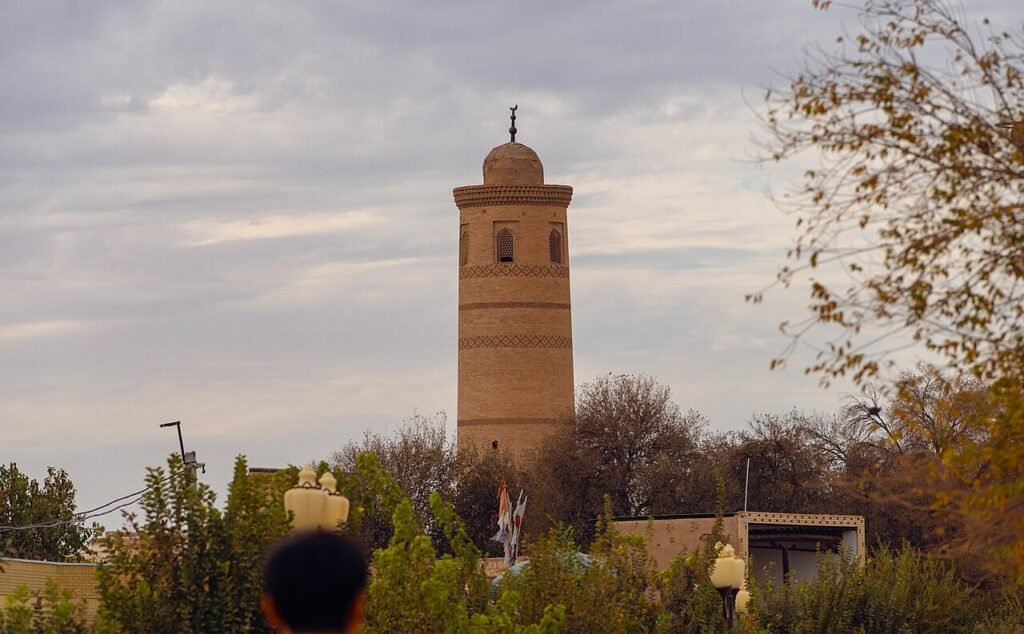

Ark of Bukhara: Citadel History, Architecture and Visitor Guide
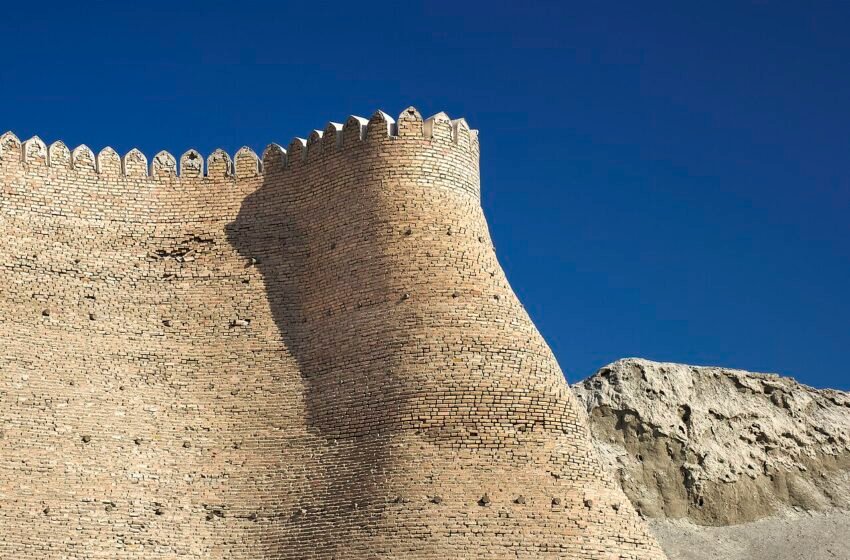
Featured photo: Ark of Bukhara (Цитадель Арк. Buxoro arki).jpg by Petar Milošević, Wikimedia Commons. CC BY-SA 4.0. Resized for display.
The Ark of Bukhara rises above the western side of the old city as a massive earthen citadel. For centuries it was the political heart of Bukhara: a fortified residence, administrative centre, ceremonial stage and symbol of dynastic authority. Its sloping walls and monumental entrance remain among the city’s most recognisable views.
The Ark seen today is the result of repeated destruction, repair and rebuilding. It should not be read as a perfectly preserved palace frozen in one period. Instead, surviving courts, mosques, reception spaces and museum displays help visitors reconstruct how the citadel functioned under the khans and emirs.
A citadel rebuilt across centuries
Fortification on this site has ancient roots, and successive rulers reshaped the mound. The Ark’s position gave control over the surrounding city and communicated authority through height and enclosure. Its walls were vulnerable to erosion and warfare, making maintenance a continuous part of its history.
The citadel remained the residence of Bukhara’s rulers into the early twentieth century. Fighting in 1920 caused major damage, and much of the interior was lost. The surviving portion and reconstructed elements now function as a museum complex, while the largely open archaeological area behind them hints at the Ark’s former scale.
Entrance, ramp and ceremonial movement
The western gate is approached by a rising ramp framed by heavy walls and towers. This controlled ascent transformed entry into a political ritual: visitors moved from the city toward the ruler’s enclosed domain. The façade visible today has been repaired, but its theatrical effect remains powerful.
Inside, circulation leads through passages and courtyards rather than a single palace hall. Notice how narrow thresholds open into broader spaces, creating alternating compression and release. These spatial sequences were practical for defence and useful for regulating access to administrative and ceremonial areas.
What survives inside
Key features include the Juma Mosque, reception areas connected with the emir’s court, service spaces and museums displaying local history, manuscripts, coins, textiles or archaeological material. Exhibitions can change, and not every part of the complex is always accessible.
The elevated edges of the visitor route provide views toward Bolo Hauz, Poi Kalyan and the old city. These viewpoints make the Ark a useful first stop: the surrounding monuments can be located visually before beginning a walking route through Bukhara.
Planning a meaningful visit
Allow between ninety minutes and two hours, depending on museum access. Morning offers cooler conditions on exposed sections, while late afternoon gives warmer light on the western walls. Some rooms are small, so give organised groups space to pass rather than trying to overtake in doorways.
After the Ark, cross to Bolo Hauz and continue toward the Samanid Mausoleum, or walk east to the Poi Kalyan Ensemble. Our Bukhara travel guide combines these landmarks into a two-day itinerary.
Practical information
Most landmarks in central Bukhara are close enough to explore on foot. Begin early, rest during the hottest part of the day and return toward sunset, when brick façades gain warmer colour. Comfortable shoes are essential because paving can be uneven. Mosques, madrasas and mausoleums may have separate ticket or access rules, and restoration work occasionally changes routes. Confirm current opening hours locally and treat prayer spaces with appropriate respect.
Before you go: Opening hours, ticket prices, restoration closures and photography rules can change. Confirm current conditions at the official ticket office, museum or your accommodation. Never climb on historic fabric, and ask permission before making close portraits of residents or vendors.
Frequently asked questions
What was the Ark of Bukhara used for?
It served as a fortified royal residence and centre of government, ceremony and administration.
Is the entire citadel preserved?
No. A substantial part was damaged in the early twentieth century; surviving and restored areas now form the visitor complex.
How long does a visit take?
Plan roughly 90 minutes, or up to two hours if you explore the museum rooms in detail.
Sources and editorial note
This independent guide was written in original language and fact-checked against the authoritative references below. It does not reproduce their text. Practical details should be rechecked close to the date of travel.
Featured photo: Ark of Bukhara (Цитадель Арк. Buxoro arki).jpg by Petar Milošević, Wikimedia Commons. CC BY-SA 4.0. Resized for display.