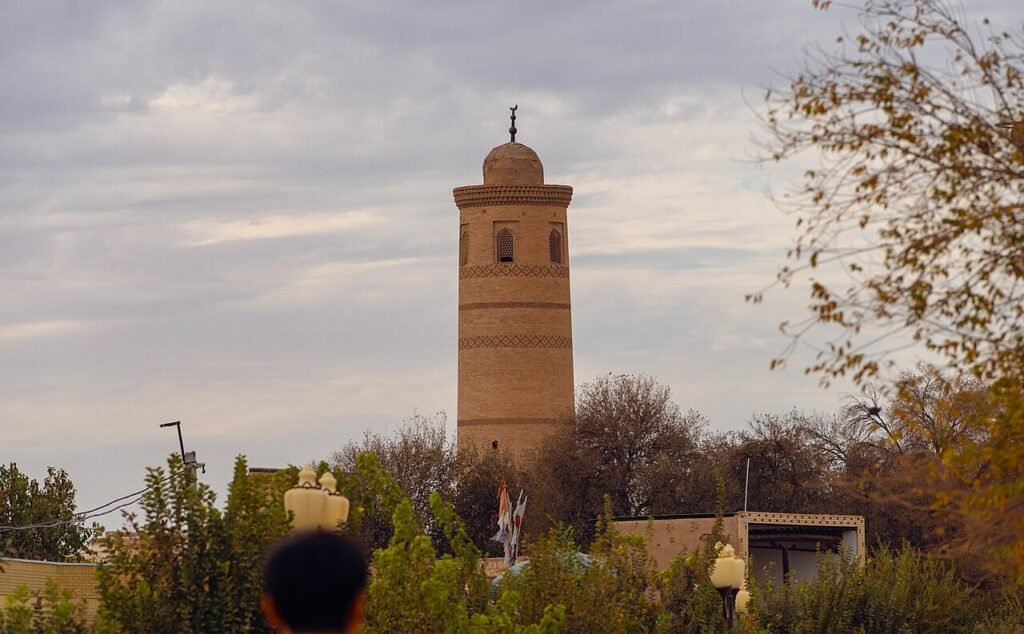
Pahlavan Mahmud Mausoleum in Khiva: History and Visitor Guide
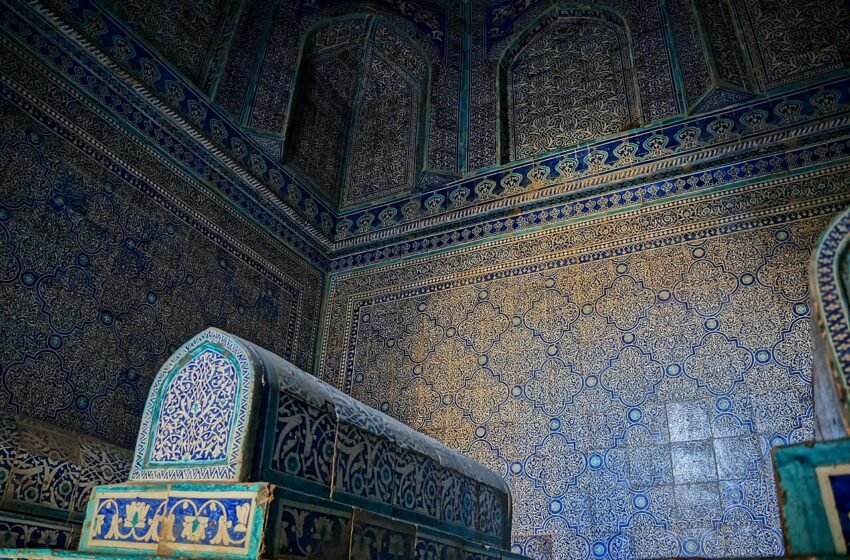
Photo: Mr Hicks46 / Wikimedia Commons. CC BY-SA 2.0. Source: https://commons.wikimedia.org/wiki/File:Pakhlavan_Makhmud_Mausoleum.jpg License: https://creativecommons.org/licenses/by-sa/2.0
Pahlavan Mahmud Mausoleum is both one of Khiva’s most beautiful interiors and one of its most sacred places. A turquoise dome rises above a courtyard complex whose chambers are covered with luminous blue-and-white majolica. At its centre is the memory of Pahlavan Mahmud, a poet, wrestler and revered local figure who became the patron saint of Khiva.
The shrine developed gradually around his burial place and later received the tombs of Khivan rulers. Its architecture therefore combines popular devotion, Sufi memory and royal commemoration. Visitors should approach it differently from a palace or museum: people still come to pray and seek blessing.
Who was Pahlavan Mahmud?
Pahlavan Mahmud lived around the thirteenth and fourteenth centuries and became celebrated for physical strength, moral character and Persian poetry. Traditions connect him with wrestling and a craft occupation, while his verses explore spiritual and ethical themes. Over time, his grave became a focus of local devotion.
Separating documented biography from legend is difficult, but the growth of the shrine demonstrates the strength of his reputation. His identity as both popular hero and spiritual figure explains why the mausoleum matters far beyond its decorative richness.
From a modest grave to a royal necropolis
The first memorial at the burial place was much smaller than the present ensemble. Major rebuilding and enlargement took place in the eighteenth and nineteenth centuries. Khans and members of the ruling elite were buried within the complex, placing dynastic memory beside the city’s revered patron.
Courtyards, domed chambers and service spaces create a compact pilgrimage complex. The large turquoise dome is a key landmark in the skyline, while the interior arrangement directs attention toward tombs and inscribed surfaces rather than a single axial hall.
Majolica, inscriptions and atmosphere
The interior is covered with Khorezmian majolica in saturated blue, turquoise and white. Floral scrolls, geometric frames and calligraphy flow across walls and domes, creating a more enveloping effect than the exterior suggests. Inscriptions and poetic associations give the decoration intellectual as well as visual meaning.
Low light can make photography difficult, but flash may disturb worship and alter colour. Put the camera away for part of the visit and observe how sound, tile reflection and small groups of pilgrims shape the space. Never photograph a person praying without clear consent.
Visiting respectfully
Dress modestly, remove shoes where instructed and keep conversation quiet. Some chambers may be reserved or temporarily closed. The mausoleum can have a separate admission arrangement from the main Itchan Kala pass, so confirm current terms at the ticket office.
Combine the shrine with Juma Mosque and the Islam Khoja Complex. Allow forty-five to sixty minutes, longer at busy pilgrimage times. Our Itchan Kala guide explains how to move through the central monuments without crowding sacred spaces.
Practical information
The core of Khiva is compact, but the concentration of monuments rewards an unhurried visit. An early start gives quieter streets and softer light; evening is ideal for seeing the walls and minarets change colour. Surfaces can be uneven and shade is limited in summer. A combined ticket may cover several museum-monuments, although inclusions can change, so verify the current arrangement at the official ticket office. Dress respectfully in mosques and mausoleums.
Before you go: Opening hours, ticket prices, restoration closures and photography rules can change. Confirm current conditions at the official ticket office, museum or your accommodation. Never climb on historic fabric, and ask permission before making close portraits of residents or vendors.
Frequently asked questions
Who was Pahlavan Mahmud?
He was a poet, wrestler and revered local figure who became remembered as the spiritual patron of Khiva.
Is the mausoleum still sacred?
Yes. It remains a place of prayer and pilgrimage as well as an architectural monument.
Is it included in the main city ticket?
Ticket combinations change, and the shrine may require separate admission; verify at the official desk.
Sources and editorial note
This independent guide was written in original language and fact-checked against the authoritative references below. It does not reproduce their text. Practical details should be rechecked close to the date of travel.
Featured photo: Pakhlavan Makhmud Mausoleum.jpg by Mr Hicks46, Wikimedia Commons. CC BY-SA 2.0. Resized for display.