
Trading Domes of Bukhara: Bazaars, Crafts and Shopping Guide
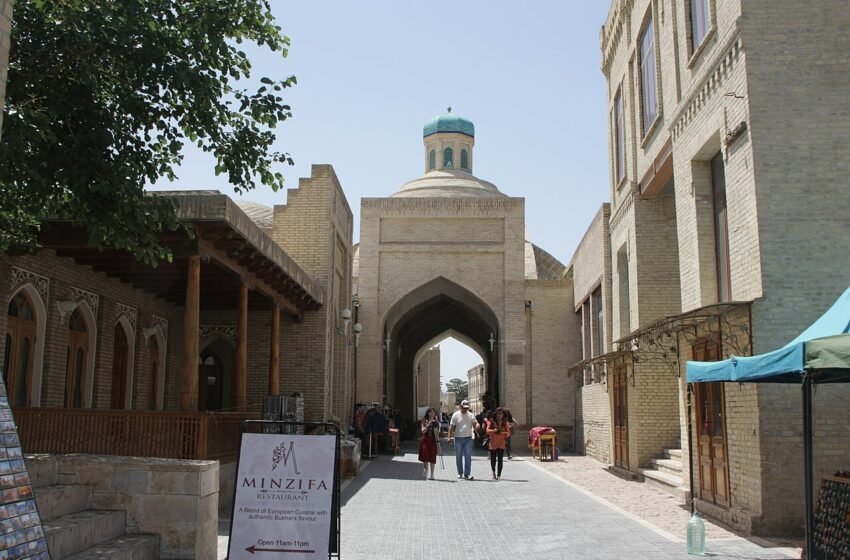
Photo: Davide Mauro / Wikimedia Commons. CC BY-SA 4.0. Source: https://commons.wikimedia.org/wiki/File:Tok-i-Sarrafon.jpg License: https://creativecommons.org/licenses/by-sa/4.0
The trading domes of Bukhara turn the route between Lyabi-Hauz and Poi Kalyan into a sequence of historic market intersections. Their brick cupolas once organised specialised trades, moderated heat and channelled movement through the commercial heart of the city. Shops still fill the passages, though today many serve travellers rather than the full range of local daily needs.
Three names appear most often: Toki Sarrafon, associated with money changers; Toki Telpak Furushon, linked with cap sellers; and Toki Zargaron, the jewellers’ dome. Understanding those former functions makes shopping more meaningful and helps visitors read the architecture as urban infrastructure rather than decorative scenery.
How the domed bazaars worked
Bukhara prospered through regional and long-distance trade. Major intersections were covered with multiple domes pierced by openings for light and ventilation. The structures gave merchants shade, defined rentable spaces and concentrated related businesses where customers could compare goods and exchange information.
Most surviving domes belong to the major sixteenth-century rebuilding of the city. Their names preserve commercial specialisation even when the merchandise has changed. Stand at the centre of each crossing and look upward: the pattern of arches shows how traffic from several streets was resolved beneath one roof.
Sarrafon, Telpak Furushon and Zargaron
Toki Sarrafon stands near Lyabi-Hauz and recalls money changers who served merchants using different currencies. Toki Telpak Furushon was associated with makers and sellers of headwear. Toki Zargaron, close to the Ulugh Beg and Abdulaziz Khan madrasas, takes its name from jewellers.
Walking south to north follows a useful progression from social square to commercial corridor and monumental centre. Smaller workshops, caravanserai courtyards and passages between the domes deserve attention; the historic market was a network, not merely three isolated cupolas.
What to buy and how to judge quality
Common goods include suzani embroidery, ikat textiles, miniature painting, jewellery, knives, carved wood, ceramics and carpets. Ask where an item was made and which technique was used. Handwork normally shows small variations, while perfectly repeated surfaces may be printed or machine-produced.
Compare several shops before bargaining and keep negotiation friendly. A low price is not automatically a good purchase if it rewards imitation or poor labour. Avoid objects presented as archaeological, genuinely antique or made from protected materials unless their legal origin and export documentation are clear.
A responsible market walk
Begin at Lyabi-Hauz, pause at Magoki Attori and continue through the domes to the paired madrasas and Poi Kalyan. Without shopping, the route takes about forty-five minutes; with conversations and workshops, allow two hours or more.
Visit once in the morning for quieter architecture and again near sunset for atmosphere. Ask permission before photographing craftspeople at close range. More monuments and a two-day sequence appear in our Bukhara travel guide.
Practical information
Most landmarks in central Bukhara are close enough to explore on foot. Begin early, rest during the hottest part of the day and return toward sunset, when brick façades gain warmer colour. Comfortable shoes are essential because paving can be uneven. Mosques, madrasas and mausoleums may have separate ticket or access rules, and restoration work occasionally changes routes. Confirm current opening hours locally and treat prayer spaces with appropriate respect.
Before you go: Opening hours, ticket prices, restoration closures and photography rules can change. Confirm current conditions at the official ticket office, museum or your accommodation. Never climb on historic fabric, and ask permission before making close portraits of residents or vendors.
Frequently asked questions
What were Bukhara’s trading domes used for?
They covered major commercial intersections and grouped specialised trades such as money changing, cap making and jewellery.
Are the domes still markets?
Yes, shops operate inside and around them, although many now focus on crafts and souvenirs for visitors.
Is bargaining expected?
Polite bargaining is common in many craft shops, but it should remain respectful and informed by workmanship.
Sources and editorial note
This independent guide was written in original language and fact-checked against the authoritative references below. It does not reproduce their text. Practical details should be rechecked close to the date of travel.
Featured photo: Tok-i-Sarrafon.jpg by Davide Mauro, Wikimedia Commons. CC BY-SA 4.0. Resized for display.