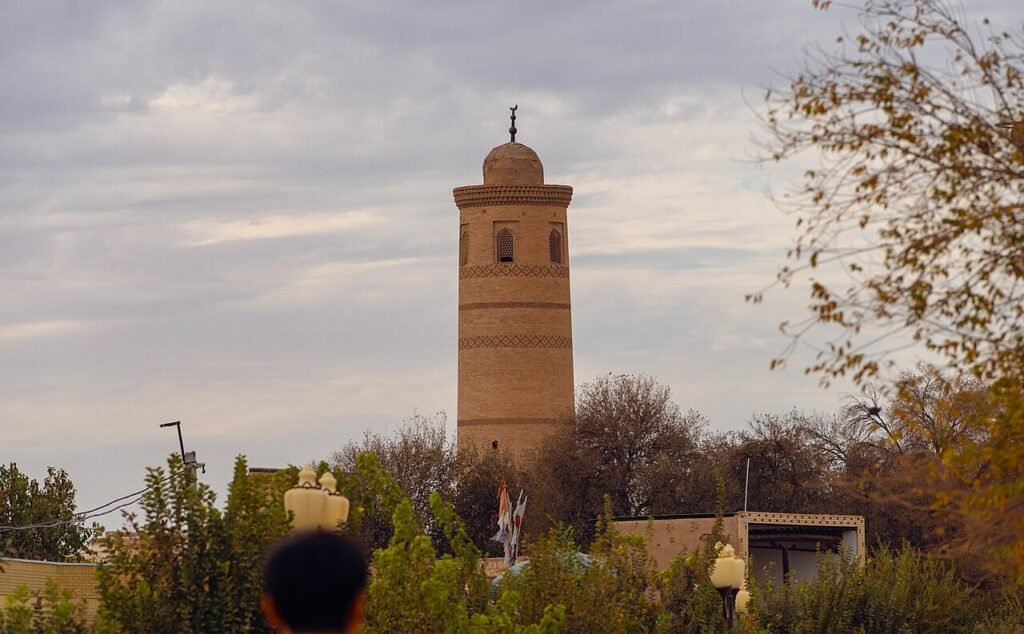
Kukeldash Madrasa in Tashkent: History and Visitor Guide

Photo: Adam Harangozó / Wikimedia Commons. CC BY-SA 4.0. Source: https://commons.wikimedia.org/wiki/File:Kukeldash_Madrasah_in_Tashkent_2.jpg License: https://creativecommons.org/licenses/by-sa/4.0
Kukeldash Madrasa rises above the edge of Chorsu Bazaar and is one of the most prominent surviving monuments of old Tashkent. Its high portal, brick courtyard and two levels of student cells preserve the form of a Central Asian religious school even though earthquakes, changing uses and repeated restoration have altered the fabric over several centuries.
Because the madrasa is active rather than a purely archaeological attraction, a visit combines architectural observation with respectful awareness of present-day study and worship. It fits naturally between the market and Hazrati Imam on a half-day route through the historic part of the capital.
Origins in the sixteenth century
Kukeldash is generally dated to the sixteenth century and associated with Dervish Khan, a high official known by the title kukeldash, meaning a close foster relationship with the ruler. The madrasa formed part of Tashkent’s historic Registan area, where public, commercial and religious life met near the principal market.
The institution was intended for religious education, but its role changed more than once. Sources record periods of decline and reuse, including service as a caravanserai. These shifts were common in Central Asian cities, where large courtyard buildings could be adapted when political or economic conditions changed.
Damage, reuse and restoration
Tashkent’s seismic history affected the monument, and parts of its original upper composition were lost. Restoration campaigns rebuilt damaged elements and returned a coherent profile to the portal and courtyard. The polished appearance should therefore be read as the latest stage in a long history of repair, not as untouched sixteenth-century fabric.
During the Soviet period, the building held secular displays, including museum functions. It later returned to religious education. This sequence makes Kukeldash an especially useful site for understanding how Tashkent’s historic buildings survived by changing purpose.
What to notice
Begin with the view from the bazaar side, where the portal’s scale is clearest. Inside, if visitor access is permitted, compare the monumental entrance with the quieter courtyard elevations and repeated hujra doorways. Brickwork, glazed accents, carved doors and the rhythm of arches create interest without the dense decoration seen at some monuments in Samarkand.
The courtyard remains connected with an educational institution, so some rooms will not be open. Do not look into occupied spaces, photograph students without consent or cross barriers. Modest clothing is appropriate, and visitors should step aside during prayer or organised lessons.
Kukeldash, Chorsu and Hazrati Imam
Combine the madrasa with Chorsu Bazaar, beginning with the market in the morning and visiting Kukeldash before the district becomes busier. Continue to the Hazrati Imam Complex by taxi or a longer walk through old-city neighbourhoods.
Allow thirty to forty-five minutes when the courtyard is accessible. Access can be reduced during religious activity or restoration, so the exterior should be considered a worthwhile visit in its own right. Use the Tashkent travel guide to connect the old city with central museums.
Practical information
Tashkent is spread across a large urban area, so group sights by district instead of crossing the city repeatedly. The metro is usually the simplest way to connect the old city, central squares and museum district. Spring and autumn are comfortable for long walks; in summer, schedule open-air visits for morning or late afternoon. Religious complexes remain active places of worship, so wear modest clothing, speak quietly and follow any local photography instructions.
Before you go: Opening hours, ticket prices, restoration closures and photography rules can change. Confirm current conditions at the official ticket office, museum or your accommodation. Never climb on historic fabric, and ask permission before making close portraits of residents or vendors.
Frequently asked questions
When was Kukeldash Madrasa built?
It is generally dated to the sixteenth century, around the 1570s, although later damage and rebuilding changed its appearance.
Is Kukeldash still a religious school?
Yes. It functions as an Islamic educational institution, so public access must respect its active role.
What is nearby?
Chorsu Bazaar is immediately nearby, and Hazrati Imam can be combined in the same old-city itinerary.
Sources and editorial note
This independent guide was written in original language and fact-checked against the authoritative references below. It does not reproduce their text. Practical details should be rechecked close to the date of travel.
Featured photo: Kukeldash Madrasah in Tashkent 2.jpg by Adam Harangozó, Wikimedia Commons. CC BY-SA 4.0. Resized for display.