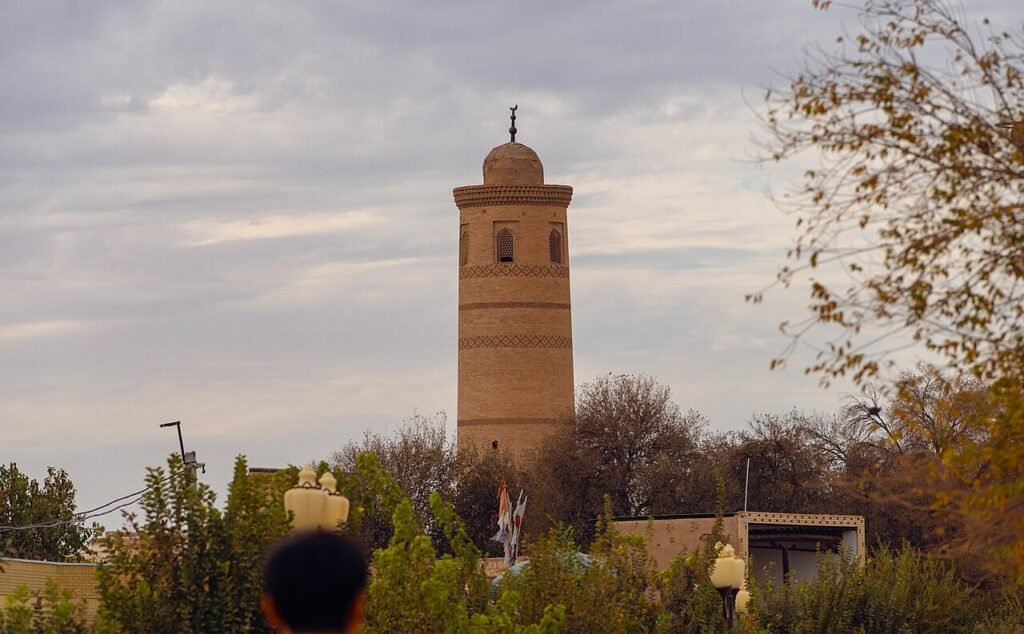

Hazrati Imam Complex in Tashkent: History and Visitor Guide
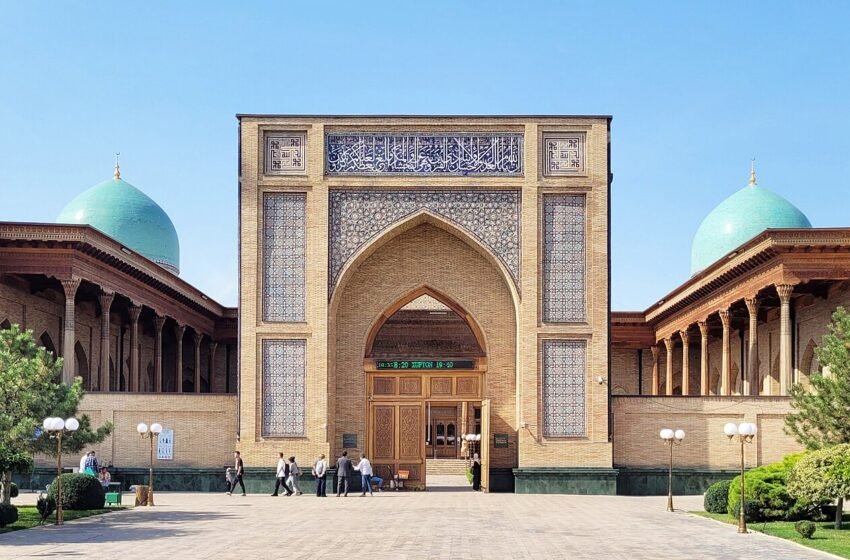
Featured photo: Hazrati Imam Mosque 01.jpg by Bgag, Wikimedia Commons. CC0. Resized for display.
The Hazrati Imam Complex, widely known as Khast Imam, is the spiritual and architectural centre of old Tashkent. Its tiled portals, domes, courtyards and active institutions bring together several centuries of religious life around the memory of Abu Bakr Kaffal al-Shashi, an influential scholar associated with medieval Shash, the historical region of Tashkent.
Unlike a single monument, Hazrati Imam is an ensemble. Visitors move between the Kaffal Shashi Mausoleum, Barak-Khan Madrasa, Tillya Sheikh Mosque, Muyi Muborak Madrasa and later Islamic institutions. Seeing the components in relation to one another makes the visit far more meaningful than treating the square only as a photo stop.
Kaffal al-Shashi and the sacred centre
Abu Bakr Kaffal al-Shashi was remembered as a theologian, jurist and scholar. His burial place became an important focus of devotion, helping the surrounding district develop into a religious centre. The mausoleum visible today reflects later rebuilding, but the association with the scholar gives the ensemble its spiritual continuity and its name.
Pilgrims and local worshippers still use the area, so it should be approached as living heritage. The calmest moments are often early in the morning, when the courtyards are quieter and the relationship between the old-city setting, mausoleum and mosques is easiest to appreciate.
Barak-Khan, Muyi Muborak and Tillya Sheikh
The sixteenth-century Barak-Khan Madrasa is among the ensemble’s principal historic buildings. Its portal, glazed decoration and domed chambers demonstrate the architectural language of Central Asian religious education. The building has served different functions across time, reflecting the changing institutional history of the complex.
Muyi Muborak Madrasa is associated with a collection of manuscripts and the celebrated Quran traditionally linked with Caliph Uthman. Because important manuscripts may be temporarily moved for conservation or exhibition, travellers should confirm the current display location rather than planning the visit around a single object. Tillya Sheikh Mosque remains an important place of worship within the ensemble.
What to notice in the architecture
Look beyond the broad symmetry of the renewed square. Compare the scale of the madrasa portal with the quieter mausoleum, study the contrast between baked brick and glazed tile, and notice how calligraphy directs attention toward entrances and sacred spaces. Restoration has given parts of the ensemble a polished appearance, while older surfaces preserve traces of age and repair.
The site is especially photogenic in angled morning or evening light. Wide views work well from the edge of the square, but close observation of carved doors, geometric ornament and blue-and-white tilework produces a more complete visual record. Always follow signs concerning photography inside manuscript or prayer areas.
Combining Hazrati Imam with old Tashkent
Hazrati Imam fits naturally into a half-day old-city route. Continue toward Chorsu Bazaar and Kukeldash Madrasa, allowing time for the side streets between major landmarks. This sequence reveals three connected dimensions of Tashkent: scholarship and worship, commercial life, and neighbourhood architecture.
For wider context, pair the complex with the State Museum of History or the Museum of Islamic Civilization when its exhibitions and visitor access are confirmed. Our Tashkent travel guide explains how to connect the old city with central museums and metro stations.
Practical information
Tashkent is spread across a large urban area, so group sights by district instead of crossing the city repeatedly. The metro is usually the simplest way to connect the old city, central squares and museum district. Spring and autumn are comfortable for long walks; in summer, schedule open-air visits for morning or late afternoon. Religious complexes remain active places of worship, so wear modest clothing, speak quietly and follow any local photography instructions.
Before you go: Opening hours, ticket prices, restoration closures and photography rules can change. Confirm current conditions at the official ticket office, museum or your accommodation. Never climb on historic fabric, and ask permission before making close portraits of residents or vendors.
Frequently asked questions
Is Hazrati Imam an active religious site?
Yes. Several parts of the ensemble are used for worship and Islamic education, so respectful behaviour and modest clothing are expected.
Can visitors see the Uthman Quran?
The ensemble is historically associated with its display, but manuscript locations and exhibition access can change. Confirm locally before visiting.
How much time is needed?
Allow 60 to 90 minutes for the main buildings, longer if exhibitions are open or if you continue through the old city.
Sources and editorial note
This independent guide was written in original language and fact-checked against the authoritative references below. It does not reproduce their text. Practical details should be rechecked close to the date of travel.
Featured photo: Hazrati Imam Mosque 01.jpg by Bgag, Wikimedia Commons. CC0. Resized for display.