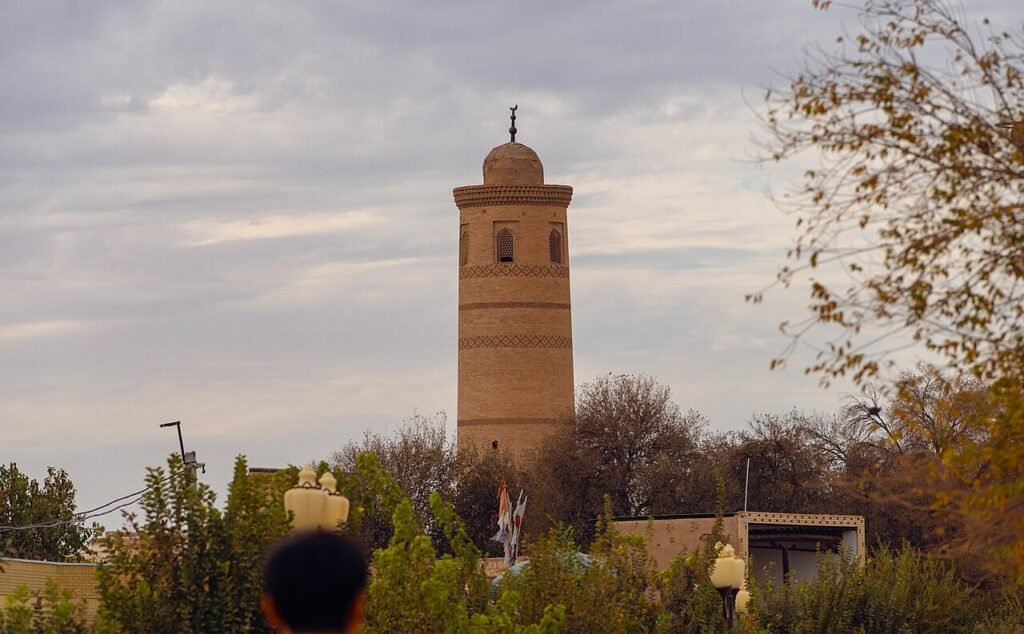

Khiva Travel Guide: Itchan Kala, Monuments and Local Tips
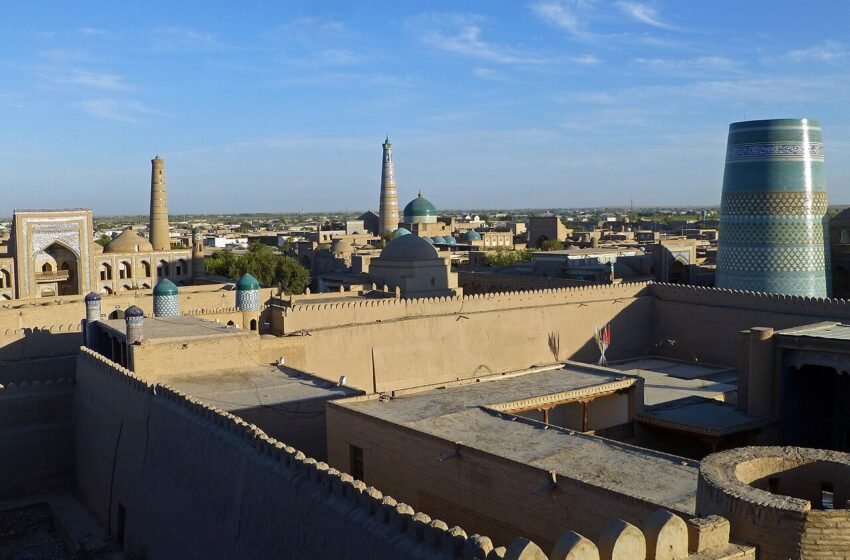
Featured photo: Vue sur Khiva (3).jpg by Ji-Elle, Wikimedia Commons. CC BY-SA 4.0. Resized for display.
Khiva presents one of the most coherent historic townscapes in Central Asia. Behind the earthen walls of Itchan Kala, minarets, madrasas, mosques, palaces, mausoleums, lanes and courtyard houses form an urban ensemble that can be explored almost entirely on foot. UNESCO inscribed Itchan Kala on the World Heritage List in 1990.
This Khiva travel guide helps visitors look beyond the city’s famous skyline. The monuments are concentrated, but their dates, functions and architectural character vary widely. A thoughtful itinerary alternates major interiors with street observation, viewpoints, craft workshops and time outside the busiest tour-group hours.
Understanding Itchan Kala
Itchan Kala is the inner walled town, distinct from Dishan Kala, the broader outer city. UNESCO describes a regular rectangular plan enclosed by walls up to about ten metres high and containing dozens of monumental structures alongside traditional dwellings. The ensemble reflects Khorezmian building traditions developed over many centuries.
Four principal gates organise access. Ota Darvoza on the west is the most common visitor entrance and opens near Kalta Minor and Muhammad Amin Khan Madrasa. Walking the perimeter and passing through more than one gate helps explain that the old city was a defended settlement, not simply an open-air museum.
Essential monuments
Begin with Itchan Kala as an urban whole, then visit the Kunya-Ark Fortress, the rulers’ citadel. Nearby, the broad turquoise Kalta Minor marks an ambitious nineteenth-century project that was never completed.
The Juma Mosque offers an entirely different spatial experience: a low, dim hall supported by a forest of carved wooden columns. Tash Hauli Palace, Pahlavon Mahmoud Mausoleum, Islam Khoja Minaret and the Allakuli Khan complexes should follow on a two-day visit.
How long to stay
One full day covers the headline sights but compresses the experience. Two days are ideal for most first-time visitors: use the first for western and central Itchan Kala, and the second for Tash Hauli, eastern monuments, museums and quieter lanes. A third day allows Dishan Kala, Nurullabay Palace or excursions in Khorezm.
Stay inside or close to the walls if early-morning and evening walks are a priority. Day visitors often arrive in concentrated groups, while the streets become calmer outside peak hours. Confirm whether a combined ticket is required and which monuments it currently includes.
Food, crafts and responsible travel
Khorezm cuisine has a clear regional identity. Look for shivit oshi, green herb noodles served with sauce and fermented dairy; tukhum barak, delicate egg-filled dumplings; and locally prepared fish. Choose busy, established kitchens and ask about portion sizes before ordering several rich dishes.
Woodcarving, puppet-making, textiles and traditional chugurma hats are characteristic souvenirs. Buy directly from working artisans when possible and ask about materials and production time. Respect residential lanes, avoid entering courtyards uninvited and remember that many buildings remain religious or community spaces.
Practical information
The core of Khiva is compact, but the concentration of monuments rewards an unhurried visit. An early start gives quieter streets and softer light; evening is ideal for seeing the walls and minarets change colour. Surfaces can be uneven and shade is limited in summer. A combined ticket may cover several museum-monuments, although inclusions can change, so verify the current arrangement at the official ticket office. Dress respectfully in mosques and mausoleums.
Before you go: Opening hours, ticket prices, restoration closures and photography rules can change. Confirm current conditions at the official ticket office, museum or your accommodation. Never climb on historic fabric, and ask permission before making close portraits of residents or vendors.
Frequently asked questions
How many days are enough for Khiva?
Two full days give most visitors time for the main monuments, museums and quieter walks.
What is the difference between Itchan Kala and Khiva?
Khiva is the city; Itchan Kala is its fortified inner town and principal World Heritage area.
Is Khiva easy to explore on foot?
Yes. The inner city is compact, though uneven surfaces, stairs and summer heat require comfortable footwear and pacing.
Sources and editorial note
This independent guide was written in original language and fact-checked against the authoritative references below. It does not reproduce their text. Practical details should be rechecked close to the date of travel.
Featured photo: Vue sur Khiva (3).jpg by Ji-Elle, Wikimedia Commons. CC BY-SA 4.0. Resized for display.