
Independence Square in Tashkent: Monuments and Visitor Guide
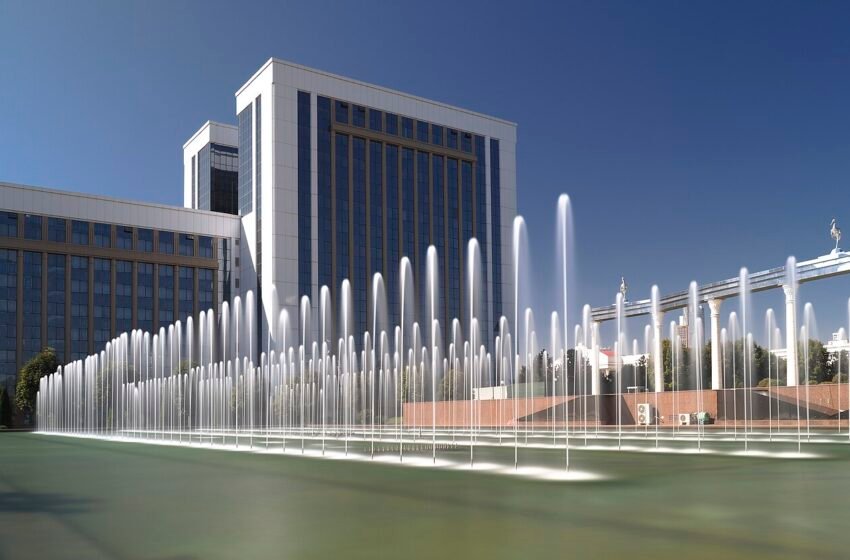
Photo: Petar Milošević / Wikimedia Commons. CC BY-SA 4.0. Source: https://commons.wikimedia.org/wiki/File:Mustaqillik_Maydoni_(%D0%A4%D0%BE%D0%BD%D1%82%D0%B0%D0%BD_%D0%B8_%D0%90%D1%80%D0%BA%D0%B0_%D0%95%D0%B7%D0%B3%D1%83%D0%BB%D0%B8%D0%BA,_%D0%BF%D0%BB%D0%BE%D1%89%D0%B0%D0%B4%D1%8C_%D0%9C%D1%83%D1%81%D1%82%D0%B0%D0%BA%D0%B8%D0%BB%D0%BB%D0%B8%D0%BA,_%D0%A2%D0%B0%D1%88%D0%BA%D0%B5%D0%BD%D1%82).jpg License: https://creativecommons.org/licenses/by-sa/4.0
Independence Square in Tashkent is the ceremonial heart of modern Uzbekistan. Broad lawns, fountains, government buildings and national memorials occupy a space whose identity has changed repeatedly with the political history of the capital. It is less a conventional tourist attraction than a carefully composed civic landscape, best understood by walking from one symbolic element to the next.
Known in Uzbek as Mustaqillik Maydoni, the square makes a useful counterpoint to the mosques and bazaars of old Tashkent. A visit reveals how the independent state reshaped a major Soviet public space while preserving its role as the setting for official ceremonies, remembrance and national celebrations.
From imperial centre to national square
The wider district developed as the administrative centre of the Russian and Soviet city. Its names, monuments and buildings changed as successive governments used the area to express authority. In the Soviet period it became closely associated with Lenin and with official parades, creating the monumental scale that still defines the approach today.
After Uzbekistan declared independence in 1991, the square received its present name and a new symbolic programme. The former Lenin monument was replaced, landscaping was renewed and later additions emphasised sovereignty, peace, family and collective memory. Reading these layers is more revealing than looking for one single historic façade.
The Independence and Humanism Monument
The central monument uses a globe marked with the outline of Uzbekistan as its principal image. At its base, the figure often described as the Happy Mother holds a child, connecting state independence with ideas of continuity and a peaceful future. The composition became one of the most recognisable visual symbols of the post-independence capital.
Nearby ceremonial gates, fountains and formal planting control the long views through the square. Security arrangements can limit access to particular paths or government buildings, especially during official events. Follow signs and barriers without attempting to enter restricted areas, and use the public pedestrian routes for photography.
Memory Square and the Second World War memorial
The northern part of the complex includes a memorial to people from Uzbekistan who died during the Second World War. Colonnaded galleries hold commemorative records, while the Mourning Mother and eternal flame create a quieter space within the broad civic ensemble. The emotional tone here is very different from the celebratory imagery elsewhere in the square.
Treat the memorial as a place of remembrance rather than a backdrop. Speak quietly, avoid posing on plinths and give families or official delegations room. Early morning is especially suitable for an unhurried visit, with softer light on the colonnades and fewer people moving between the metro and administrative quarter.
How to include the square in a city route
Mustaqillik Maydoni metro station provides the simplest approach. From the square, continue toward the Alisher Navoi Theatre, Broadway pedestrian area and Amir Temur Square for a compact introduction to central Tashkent. Several of the most decorative stations can be added without a separate journey using our Tashkent Metro guide.
Allow forty-five to sixty minutes for the square and memorial spaces, longer if you enjoy urban history or photography. For the old city, museums and market district, use our complete Tashkent travel guide rather than trying to walk the entire capital from this central point.
Practical information
Tashkent is spread across a large urban area, so group sights by district instead of crossing the city repeatedly. The metro is usually the simplest way to connect the old city, central squares and museum district. Spring and autumn are comfortable for long walks; in summer, schedule open-air visits for morning or late afternoon. Religious complexes remain active places of worship, so wear modest clothing, speak quietly and follow any local photography instructions.
Before you go: Opening hours, ticket prices, restoration closures and photography rules can change. Confirm current conditions at the official ticket office, museum or your accommodation. Never climb on historic fabric, and ask permission before making close portraits of residents or vendors.
Frequently asked questions
What is Independence Square called in Uzbek?
Its Uzbek name is Mustaqillik Maydoni, which is also the name of the nearby metro station.
Is Independence Square free to visit?
Public pedestrian areas are normally open without an admission ticket, although security restrictions or official events may change access.
How long should visitors allow?
About one hour is comfortable for the main monuments, fountains and remembrance area.
Sources and editorial note
This independent guide was written in original language and fact-checked against the authoritative references below. It does not reproduce their text. Practical details should be rechecked close to the date of travel.
Featured photo: Mustaqillik Maydoni (Фонтан и Арка Езгулик, площадь Мустакиллик, Ташкент).jpg by Petar Milošević, Wikimedia Commons. CC BY-SA 4.0. Resized for display.