
Lyabi-Hauz Ensemble in Bukhara: History and Visitor Guide
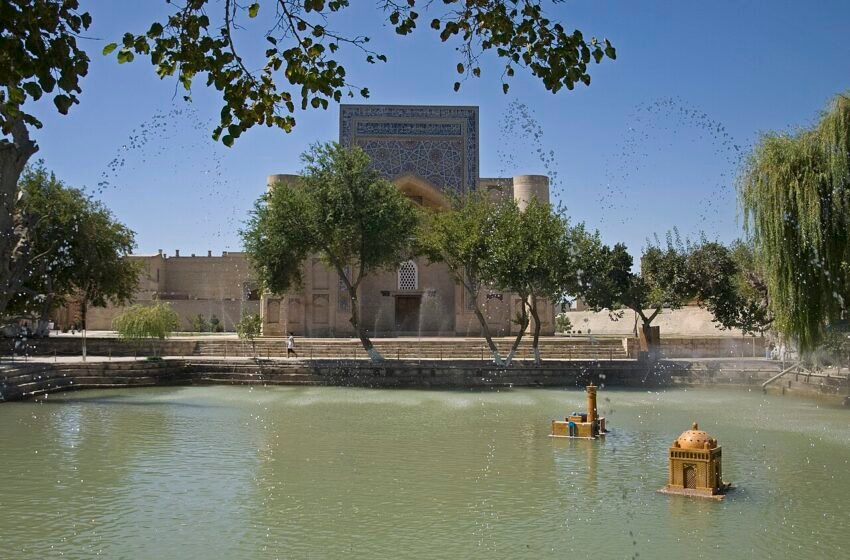
Featured photo: Lyabi-Hovuz and Nadir Divanbegi Khanqah.jpg by Ymblanter, Wikimedia Commons. CC BY-SA 4.0. Resized for display.
Lyabi-Hauz is one of Bukhara’s most atmospheric public spaces. Its name means “by the pool,” and the rectangular hauz remains the centre of an ensemble framed by mature trees, historic religious buildings, cafés and pedestrian routes through the old city. It is both a monument and a place where contemporary Bukhara gathers.
The principal architecture spans the late sixteenth and early seventeenth centuries: Kukeldash Madrasa stands to the north, while the Nadir Divan-Begi khanaka and madrasa shape the other sides. Their differing functions turned the pool into a meeting point for residents, students, travellers and worshippers.
Why pools mattered in Bukhara
Before modern water systems, neighbourhood pools stored and distributed water while organising social space. Bukhara once had many hauz, though health concerns and urban change led to the removal of most. Lyabi-Hauz survived and became the city’s best-known example.
The pool should not be romanticised without context: historic water systems were essential but could also create sanitation problems. Its present value lies in the surviving relationship between water, shade, architecture and public life, a relationship that is difficult to understand from individual building photographs alone.
Kukeldash Madrasa
Kukeldash Madrasa is the earliest major building in the ensemble and one of the largest madrasas in Bukhara. Its plan is organised around a courtyard with student cells and teaching spaces. From the square, its long façade provides a measured backdrop rather than competing with the pool.
Look for the contrast between monumental entrance composition and the repetitive rhythm of smaller openings. Access and interior use can change, so treat open courtyards and shops as part of an active historic structure rather than assuming every room is a museum display.
Nadir Divan-Begi khanaka and madrasa
The khanaka provided space connected with Sufi religious life and hospitality. Across the pool, the Nadir Divan-Begi Madrasa is famous for its portal decoration, including vivid paired creatures or birds and a radiant solar motif—imagery that surprises visitors who expect only abstract ornament.
The building is often described as having been planned initially for another commercial or hospitality function before becoming a madrasa. Whatever the exact development, its façade now supplies the ensemble’s strongest decorative focus and demonstrates the variety possible within Central Asian architectural traditions.
Experiencing Lyabi-Hauz
Visit once during the quieter morning and again in the evening, when families, visitors and diners fill the square. Restaurants can make the centre feel commercial, but moving to the edges reveals calmer views of façades, water and trees. Ask before photographing performers or individuals at close range.
Lyabi-Hauz is a natural starting point for a walk through the trading domes to the Poi Kalyan Ensemble. It also connects easily with the old Jewish quarter and Chor Minor. See our Bukhara travel guide for a complete route.
Practical information
Most landmarks in central Bukhara are close enough to explore on foot. Begin early, rest during the hottest part of the day and return toward sunset, when brick façades gain warmer colour. Comfortable shoes are essential because paving can be uneven. Mosques, madrasas and mausoleums may have separate ticket or access rules, and restoration work occasionally changes routes. Confirm current opening hours locally and treat prayer spaces with appropriate respect.
Before you go: Opening hours, ticket prices, restoration closures and photography rules can change. Confirm current conditions at the official ticket office, museum or your accommodation. Never climb on historic fabric, and ask permission before making close portraits of residents or vendors.
Frequently asked questions
What does Lyabi-Hauz mean?
The name means “by the pool” and refers to the historic water basin at the centre of the ensemble.
Which buildings surround the pool?
The principal monuments are Kukeldash Madrasa, Nadir Divan-Begi Khanaka and Nadir Divan-Begi Madrasa.
When is the best time to visit?
Morning is quieter; evening is livelier and shows how the square functions as a contemporary social space.
Sources and editorial note
This independent guide was written in original language and fact-checked against the authoritative references below. It does not reproduce their text. Practical details should be rechecked close to the date of travel.
Featured photo: Lyabi-Hovuz and Nadir Divanbegi Khanqah.jpg by Ymblanter, Wikimedia Commons. CC BY-SA 4.0. Resized for display.